University of Alberta Launches Regenerative Medicine Hub to Advance Research and Commercialization
The primarily virtual network will connect biomedical researchers with clinicians, regulators, economists, and industry partners across the healthcare value chain.
Key Points
- The University of Alberta has launched a regenerative medicine hub through its College of Health Sciences to advance research and commercialization.
- The primarily virtual network will connect biomedical researchers with clinicians, regulators, economists, and industry partners across the healthcare value chain.
- Led by Dr. Anastassia Voronova, the hub has already drawn partnership interest from the University of Calgary and the University of British Columbia.
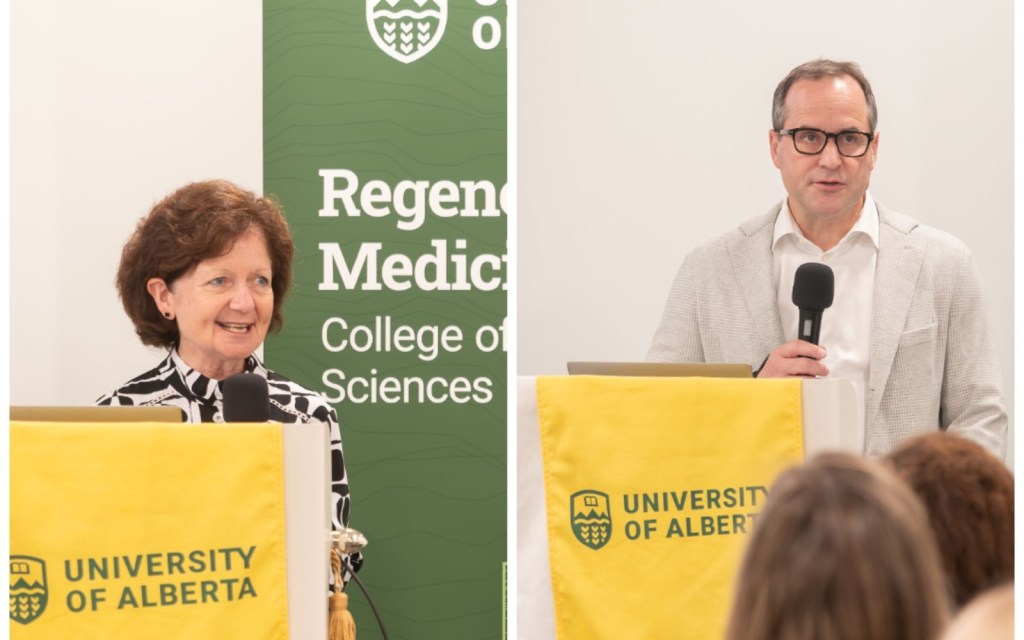
The University of Alberta (U of A) launched a regenerative medicine hub on Tuesday during Alberta’s Life Sciences Week. Announced at Edmonton Unlimited, the initiative is spearheaded by the U of A’s College of Health Sciences and will operate as an “interdisciplinary and collaborative community” working toward advancing regenerative healthcare through research and commercialization.
Stay updated on Cell & Gene news
Thanks! Your signup has been saved.
Regenerative medicine focuses on developing treatments for illnesses that repair the root causes of disease rather than focusing on symptom relief. These treatments use natural or bioengineered cells, molecules, assistive devices, and the body’s own processes to explore treatments that heal and regenerate, or halt progression of disease. Stem cell research, tissue engineering, and transplantation are common areas of study.
Led by Dr. Anastassia Voronova, an associate professor at the U of A, the hub is a primarily virtual network bringing together biomedical researchers with stakeholders across the healthcare value chain, including economists, systems administrators, clinicians, regulators, and entrepreneurs, to support advancing novel research toward clinical adoption.
Three foundational goals
The hub is built around interdisciplinary integration, network development and training, and translation and commercial acceleration. The first two goals involve pairing biomedical researchers with adjacent fields such as health economics, nursing, and health law, then developing industry partnerships to train interdisciplinary teams that can address “complex health challenges.” The third goal positions the hub as a platform for enabling discoveries to move toward commercialization.
“It’s really meant to act as a bridge,” Voronova said. “It’s not just about developing a drug or a therapy, because you really have to think about it as an entire ecosystem to continue,” she added. “There are a lot of questions that need to be addressed, and the hub really brings everyone together.”
Position in Canada’s regenerative medicine landscape
The U of A hub joins peers such as Toronto’s Centre for Commercialization of Regenerative Medicine and the pan-Canadian Stem Cell Network, which aligns researchers, clinicians, and entrepreneurs to fund stem cell research. Voronova said the U of A hub is unique in Alberta.
“There is no organized presence right now in Alberta that addresses regenerative medicine, research, and healthcare implementation,” she told BetaKit in an interview. She added that the hub has already drawn partnership interest from researchers at the University of Calgary and the University of British Columbia.
According to the hub’s website, membership is open to anyone with research interests related to regenerative medicine, as well as U of A faculty, students, clinicians, and trainees.
Voronova said the hub currently has little funding to support its rollout but is actively seeking support from public and private entities. “This is Day 1, so what I would say is that we invite government funding, agencies, companies, researchers, and trainees all to the table. We really can’t address issues that are important to members if members don’t show up.”
Want to keep up on regenerative medicine? Get the weekly newsletter here.
Similar stories
 Tempo Therapeutics Receives NIH Grant of Up to $2.25 Million to Study Synthetic Wound Matrix
 GSK to Acquire Trispecific T Cell Engager for Multiple Myeloma From Chimagen in Deal Worth Up to $750 Million
 Shanghai Jiao Tong University School of Medicine Tests Intranasal Umbilical Cord Exosomes for Early Parkinson’s Disease
 Personalized Stem Cells’ New Trial Tests Adipose Stem Cell Therapy for Chronic Mild Traumatic Brain Injury
 Royan Stem Cell Technology’s New Trial Tests Mesenchymal Stromal Cells for Stroke
 Ori Biotech Nabs $120 Million Contract to Integrate Its Automated Cell Therapy Manufacturing Platform
 Tikva Allocell Presents Preclinical Findings on Armored Allogeneic CD19 CAR T-Cell Therapy for Systemic Lupus Erythematosus
 Shennon Biotechnologies Raises $12 Million, Unveils T-Cell Oncology Pipeline