Xtant Medical Releases Growth Factor Product to Improve Orthopedic/Spine Surgery Outcomes

OsteoFactor Pro™ targets improved orthopedic healing through enhanced bone regeneration and versatile scaffold compatibility.

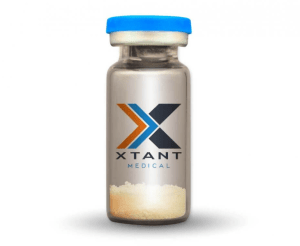
Xtant Medical Holdings has announced the commercial launch of OsteoFactor Pro™, an allogeneic growth factor solution designed to improve bone healing and surgical outcomes in orthopedic and spine procedures.

OsteoFactor Pro™ is described as a naturally derived formulation rich in growth factors, intended to enhance the biological activity and regenerative potential when combined with orthobiologic scaffolds. It has a biphasic release profile characterized by an initial bolus followed by sustained release, aiming to stimulate key bone regeneration processes, including angiogenesis (formation of new blood vessels), chemotaxis (cell migration), and osteogenesis (bone formation).

The product is designed as an off-the-shelf, ready-to-use solution compatible with a variety of scaffolds, including synthetic, allograft, and autograft materials, providing surgeons with versatility in different bone regeneration strategies.

OsteoFactor Pro™ is now available through Xtant Medical’s nationwide distribution network.

Mark Schallenberger, COO of Xtant Medical added, “With the launch of OsteoFactor Pro™, Xtant becomes the first vertically integrated company to offer solutions across all five major orthobiologic categories—demineralized bone matrix, cellular allografts, synthetics, structural allografts, and now growth factors. This milestone reflects our long-term commitment to innovation, scalability, and meeting the full spectrum of surgeon and patient needs in regenerative medicine.”

If you found this post helpful, would you mind sharing it? ⬇️ 

Latest Clinical Trials

Researchers will test whether nasal drops containing stem cell-derived vesicles can safely benefit people with a range of neurodegenerative diseases.
Researchers in China are testing whether exosomes can help prevent or treat organ failure after aortic dissection surgery.
Hope Biosciences will study whether stem cell therapy can reduce inflammation or slow Alzheimer’s progression in a new clinical trial.
The study will test whether induced pluripotent stem cells can help repair airway damage in people with COPD.

Related Content:

Cedars-Sinai researchers will examine how microgravity affects the growth and development of heart and brain organoids in orbit.
Researchers generated 3D jawbone tissue from induced pluripotent stem cells
GC Therapeutics unveils data showing rapid, precise generation of human microglia-like cells, advancing scalable cell therapy production.
Startups in regenerative medicine gain free lab access, advanced equipment, and support to accelerate product development and commercialization.
The first use of silk-based SilkAxons™ aims to address large peripheral nerve injuries where current treatments fall short.
NurExone secures U.S. patent protection for its exosome production method, supporting scale-up and clinical supply chain readiness.
The FDA designation follows promising Phase II trial results for Hope Biosciences’ stem cell therapy in relapsing-remitting multiple sclerosis.
Researchers are testing a novel CRISPR-based therapy for FSHD, with participants monitored for safety and long-term outcomes.
Zemcelpro® offers a new stem cell transplant option for adults with blood cancers unable to find compatible donors in Europe.
The collaboration aims to streamline iPSC-based therapy development by integrating advanced cell engineering with specialized culture matrices.
Nurexone Biologic has developed an exosome therapy for nerve repair, we interviewed the CEO, Dr. Lior Shaltiel here. Enjoy!
Independent analysis finds NurExone’s exosomes deliver enhanced regenerative signals, showing promise for nerve repair and tissue healing applications.

Discover more from Regen Report

Subscribe now to keep reading and get access to the full archive.

Continue reading