University of Auckland Leads Pioneering CRISPR Gene Therapy Trial for Muscular Dystrophy
Researchers are testing a novel CRISPR-based therapy for FSHD, with participants monitored for safety and long-term outcomes.
A clinical trial at the University of Auckland’s Centre for Brain Research is testing a new genetic treatment for facioscapulohumeral muscular dystrophy (FSHD), a rare muscle-wasting condition. This is the first clinical trial of the therapy, which researchers hope could lead to a cure. Currently, no treatments exist that change the course of FSHD, a genetic disorder that causes progressive facial paralysis, difficulty raising the arms, and, in severe cases, loss of mobility requiring use of a wheelchair.
Nine patients from New Zealand, the United States, and Australia are participating in the study. They are receiving a CRISPR-based therapy targeting the faulty DUX4 gene, which is responsible for the condition.


According to Associate Professor Richard Roxburgh, neurologist at the Centre for Brain Research: “In healthy people, muscle cells do all they can to turn off DUX4 production; however, in people with facioscapulohumeral muscular dystrophy, genetic changes allow DUX4 production to escape this suppression.”
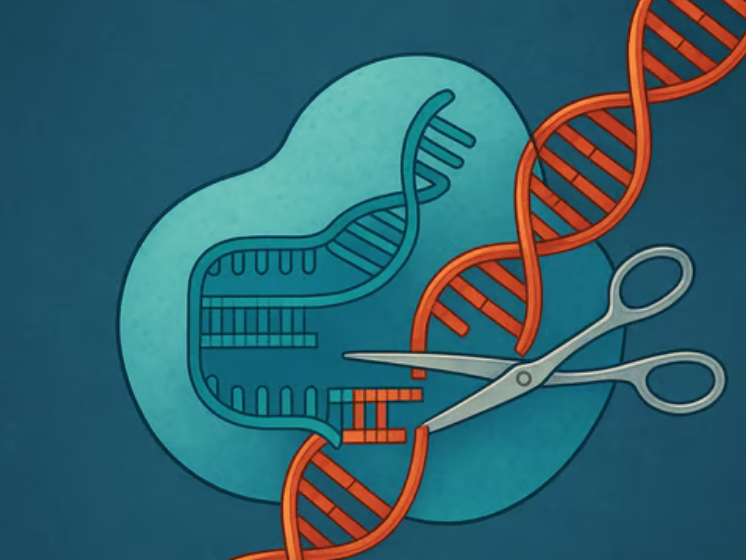
The investigational therapy, known as EPI-321, uses epigenetic editing—a method that permanently instructs genes to alter their behavior. The therapy is delivered via a modified virus, common in the community and generally asymptomatic, which acts as a carrier for the instructions to suppress DUX4 production. This delivery method enables a single injection to reach hundreds of billions of muscle cells throughout the body.
While preclinical safety studies in animal models suggest EPI-321 is safe, the potential for adverse reactions in humans remains unknown. Roxburgh notes: “But we don’t know how people will react until it’s actually tried in humans.” He adds, “While the virus doesn’t cause any problems if you catch it in the community, giving a big dose of it all in one go – the study gives trillions of copies – can potentially cause serious reactions from the body’s immune system.”
Participants will be monitored for five years to track potential side effects and improvements in symptoms. Roxburgh describes: “People stepping up for the study are aware of this risk and are pioneers – like first explorers or astronauts going into the unknown.”
This trial is one of two international FSHD studies currently led by the Centre for Brain Research. A separate trial, launched last year and testing a different genetic approach, is reportedly showing promising results.
Miriam Rodrigues, who is involved in participant recruitment, commented: “Advances in genetic research and technology are showing real promise for diseases like facioscapulohumeral muscular dystrophy, but robust clinical trials are essential to assess how well these new therapies work.
“New Zealand is an ideal location for clinical trials. We have world-class researchers, a high-quality healthcare system, and a motivated patient community. Yet, there are still too few opportunities for New Zealanders to participate in leading-edge trials like this one.”
The study is led by Roxburgh in partnership with the Pacific Clinical Research Network, a private clinical trials organization.
One of the New Zealand participants, referred to as Sarita*, is the first local patient to join this gene therapy trial. Diagnosed with FSHD two years ago and told there was no cure, Sarita now joins eight other participants worldwide in hopes of halting the disease’s progression.
“It’s given me hope — I didn’t have any hope two years ago,” she says.
Previously active, Sarita began experiencing muscle weakness in her late 50s, such as difficulty standing on tiptoes or walking uphill. She describes her symptoms: “It was like my brain was trying to tell my muscles to move and the message was getting blocked along the way.”
After extensive testing, she was diagnosed with FSHD, which affects approximately 130 people in New Zealand. In the past two years, her mobility has declined, and she faces the risk of losing her job and independence.
“It’s like you’re a ticking time bomb and you don’t know when the alarms are going to go off in your body – that’s a really unsettling way to live.
If I’m not given something soon, I will lose my independence. I suppose that’s what I see this trial as — potentially giving me hope of keeping my independence.”
Despite the risks of an experimental treatment, Sarita did not hesitate to join the trial: “When you’re told there’s no cure and someone offers you a chance, you take it. Even if it means a small improvement, like walking a bit better. And if it doesn’t work, it is what it is — but at least you gave it a go.”
“Suddenly I have an ability to do something for a disease that I have no power over whatsoever, and that’s a wonderful feeling,” she says.
*Name changed for privacy.
Want to keep up on regenerative medicine? Get the weekly newsletter here.