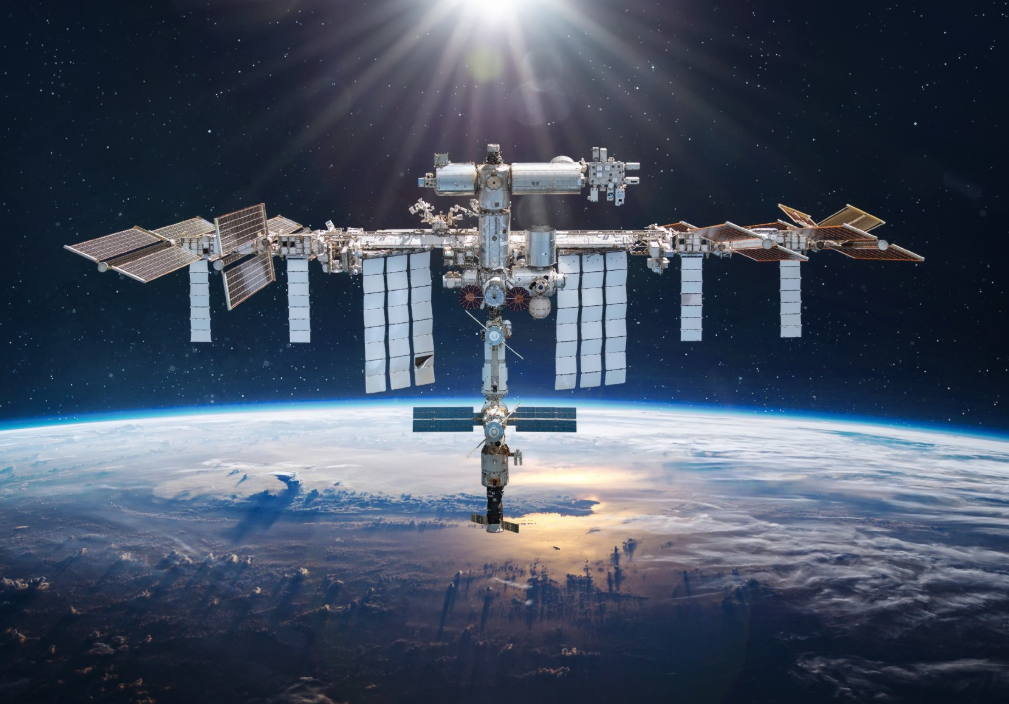
Cedars-Sinai researchers sent new stem cell experiments to the International Space Station (ISS) to investigate whether microgravity can improve the production of three-dimensional clusters of heart and brain cells, known as organoids. This mission, launched from Kennedy Space Center on August 24, will be the first time Cedars-Sinai has attempted to create heart and brain organoids in space.
Organoids are small, three-dimensional clumps of cells that resemble an organ, in this case, derived from heart or brain tissue, derived from induced pluripotent stem cells (iPSCs)
These organoids, typically less than 1 millimeter in size, are usually invisible to the naked eye but are valuable for modeling disease and testing drugs on a large scale. Arun Sharma, PhD, director of the Cedars-Sinai Center for Space Medicine Research, noted, “We can create thousands of these organoids in just weeks, allowing us to model disease and test drugs at a scale we would not be able to achieve otherwise.”

The cells were sent as part of NASA’s SpaceX 33rd commercial resupply mission to the ISS. This marks Cedars-Sinai’s sixth participation in space-based research and the third mission supported by a NASA In-Space Manufacturing Award, in partnership with Axiom Space. Previous missions included introducing DNA into stem cells in space, using off-the-shelf laboratory hardware for biosciences research in orbit, and producing stem cells outside Earth’s gravity.
Clive Svendsen, PhD, executive director of the Board of Governors Regenerative Medicine Institute, stated, “My lab is focused on the study of neurodegenerative diseases such as ALS, Huntington’s disease and Parkinson’s disease, and we use brain organoids as a tool for modeling these diseases. Creating these organoids in space is potentially a step toward accelerating our work and gaining better understanding of these diseases.”
Researchers believe that growing organoids in microgravity could offer several advantages. Sharma explained, “On Earth, gravity compresses these organoids, which are three-dimensional spheres. In space, gravity is reduced to almost nothing, what we call microgravity, and we believe that organoids will grow better under these conditions. They might develop new blood vessels that we aren’t able to develop on Earth, organize themselves in unique ways, or maybe even harbor different cell types that we can only develop in microgravity.”
The stem cells, sourced from the Allen Institute for Cell Science, were frozen for transport and travel in a “plate habitat” created by BioServe Space Technologies.
After about a month in space, the organoids will be returned to Cedars-Sinai for analysis of their size, structure, genetics, and other properties. Sharma said, “A dream of mine is to have a lab in space that is parallel with the labs that we have here on Earth. That would allow us to create organoids and explore biomedical applications like bioprinting of artificial heart, brain and muscle tissues in space in ways that we may not be able to on Earth.”
Looking ahead, the team will conduct experiments funded by a new National Institutes of Health grant, aiming to use microgravity to model accelerated inflammation and aging in organ chip models of the heart, gut, and brain.
Want to keep up on regenerative medicine? Get the weekly newsletter here.