Promega Licenses Reporter Technologies to BrainXell for Engineered Stem Cell Neural Models
The agreement lets the Wisconsin-based cell producer integrate the reporter tools into stem-cell lines and generate central nervous system cell types through directed differentiation.

Key Points
- Promega and BrainXell have signed a license agreement covering Promega’s HaloTag, NanoLuc, and NanoBiT reporter technologies in induced pluripotent stem cell (iPSC)-derived neural models.
- BrainXell is authorized to engineer the technologies into iPSC lines and iPSC-derived central nervous system models, and to generate neural cell types through directed differentiation in its own models and custom projects.
- The reporter tools can measure protein expression, localization, interactions, and degradation in living human neural cells.
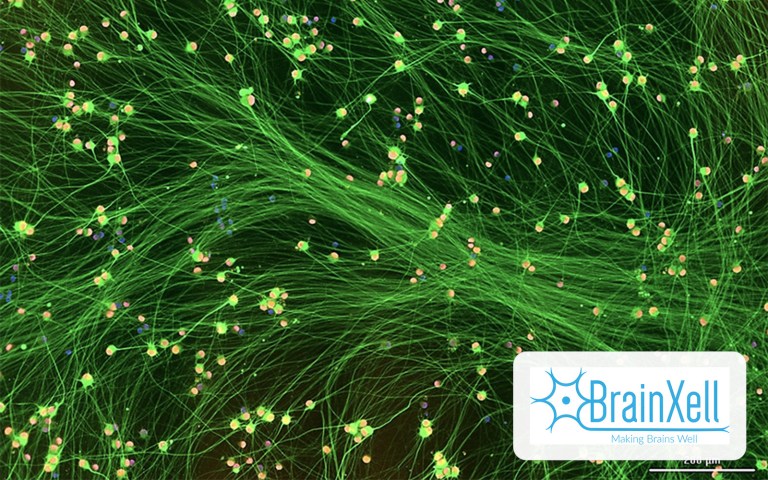
Promega Corporation, a Madison, Wisconsin-based life sciences tools company, and BrainXell, Inc., a Wisconsin-based producer of iPSC-derived human cells such as neurons and glia, have signed a license agreement covering Promega’s HaloTag, NanoLuc, and NanoBiT reporter technologies. The agreement authorizes BrainXell to engineer the technologies into induced pluripotent stem cell (iPSC) lines and iPSC-derived models of the central nervous system.
Stay updated on Cell & Gene news
Thanks! Your signup has been saved.
HaloTag is a protein tag that forms a permanent bond with a chemical label. Researchers can use it to visualize where a protein is in a cell or isolate the protein for analysis.
NanoLuc is a small enzyme that produces light. Used as a reporter, it lets researchers measure gene activity or follow the behavior of a tagged protein in living cells.
NanoBiT splits the light-producing reporter into two pieces. When the proteins carrying those pieces interact, the pieces come together and produce a light signal, so researchers can observe the interaction in living cells.
Researchers will use these tools to measure protein expression, localization, and interactions in human neural cell types. The technologies are widely used to monitor protein expression, localization, interactions, and degradation in living cells. In human neural models, these measurements let scientists examine how proteins behave in cell types relevant to neurological research.
BrainXell is authorized to engineer the tools into iPSC lines, then use directed differentiation to generate neural cell types through its own models and custom projects built for individual research teams.
“Reporter-enabled human neural models take expertise that few labs have in-house,” said Kevin Kopish, Associate Fellow, Product Discovery & Adoption, Promega. “This license creates valuable access by authorizing BrainXell to build Promega technologies into those models for research teams.”
“This agreement with Promega allows our customers to access bespoke neural cell models incorporating cutting-edge reporter technologies for more efficient and translatable CNS drug discovery at scale,” added Michael Hendrickson, BrainXell’s VP of Operations.
More information on Promega reporter technologies is available at www.promega.com/bioluminescence, and details on BrainXell iPSC models are at www.brainxell.com.
Want to keep up on regenerative medicine? Get the weekly newsletter here.
Similar stories
 BrainXell and Neuroservices-Alliance Profile Induced Pluripotent Stem Cell–Derived Sensory Neurons
 California Institute for Regenerative Medicine Awards $6.9 Million for Preclinical Development of Stem Cell-Derived Cardiac Muscle Therapy for Severe Heart Attack
 CellFiber Opens First International Subsidiary in Philadelphia to Support Cell and Gene Therapy Development
 Curi Bio Expands Curiverse 3D Tissue Ecosystem with New Disease Models, Casting Kits, and Assay Services
 Matricelf Receives FDA Feedback Supporting Proposed First-in-Human Trial Design for NewRal in Traumatic Spinal Cord Injury
 YiPSCELL Receives Korean Patent Registration Decision for Low-Immunogenicity Universal iPSC Technology
 SmartCella Licenses Extroducer Endovascular Delivery Platform to HeartWorks for iPSC-Derived Cardiac Cell Therapies
 ABEC Launches ATB-2100 Advanced Therapy Bioreactor for Cell and Gene Therapy Manufacturing