Tempo Therapeutics Receives NIH Grant of Up to $2.25 Million to Study Synthetic Wound Matrix
The study will examine whether its synthetic wound bed is suitable for grafting following complex non-melanoma skin cancer resections with exposed bone.
Key Points
- Tempo Therapeutics received an NIH SBIR award with potential total funding of up to $2.25 million over two years to support a randomized clinical study of its MAP Wound Matrix, a synthetic biomaterial wound matrix.
- The MOSAIC II trial will evaluate whether the matrix reduces time to graft-readiness after non-melanoma skin cancer resections with exposed bone.
- Funding is subject to continued satisfactory progress and availability of funds.
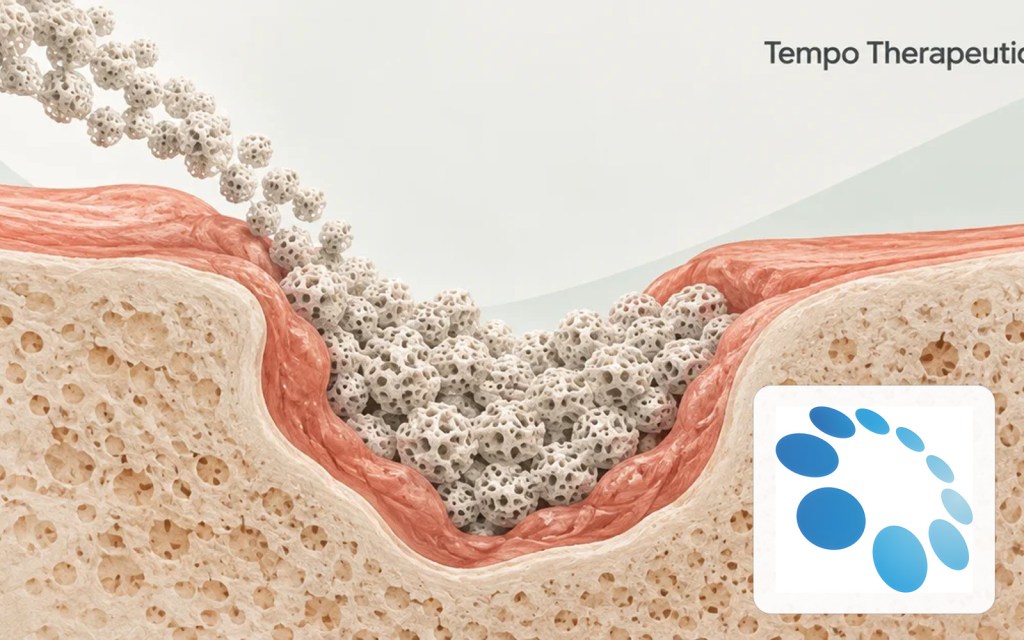
Tempo Therapeutics, a clinical-stage regenerative medicine company developing synthetic biomaterials, has received a Small Business Innovation Research (SBIR) award from the National Cancer Institute (NCI), part of the National Institutes of Health, to support a randomized clinical study of its proprietary Microporous Annealed Particle (MAP) Wound Matrix, a synthetic biomaterial scaffold made of microporous annealed particles designed to support new tissue growth within a wound.
Stay updated on Cell & Gene news
Thanks! Your signup has been saved.
The award provides potential total funding of approximately $2.25 million over two years, subject to continued satisfactory progress and availability of funds. The project, MOSAIC II: A Randomized Clinical Study of the MAP Wound Matrix to Reduce Time to Graft-Readiness after Non-Melanoma Skin Cancer Resection, will be led by Stephanie Deshayes, Ph.D., Vice President of Research & Development at Tempo and Principal Investigator of the grant.
“This award brings Tempo closer to an important value-enhancing milestone: demonstrating that MAP can provide a fundamentally different approach to wound management by accelerating the formation of healthy tissue while minimizing the inflammatory foreign-body response,” said Steven Sands, Chairman of Tempo Therapeutics. “If successful, we believe this platform could address multiple wound indications where current treatment options remain inadequate, potentially improving outcomes for patients while reducing the clinical burden and cost of managing complex wounds.”
“MAP is designed to accelerate the formation of healthy, vascularized tissue within complex wounds,” said Stephanie Deshayes, Ph.D., Vice President of Research & Development at Tempo Therapeutics and Principal Investigator of MOSAIC II. “This award allows us to evaluate that approach in more challenging wounds where the unmet clinical need remains significant.”
Unlike traditional approaches that can trigger a persistent foreign-body response, MAP was engineered to support the body’s regenerative processes while minimizing inflammatory signaling associated with implanted materials. The goal is to enable rapid, volumetric growth of healthy tissue within complex wounds and create a vascularized wound bed suitable for subsequent reconstruction or grafting.
“The ability to regenerate tissue throughout the volume of a complex wound—rather than simply promoting healing from the margins—could fundamentally change the way difficult wounds are treated,” said Westbrook Weaver, Ph.D., Co-Founder and Chief Technology Officer of Tempo Therapeutics. “MAP was designed as a flowable, volumetric scaffold to support the rapid ingrowth of cells and tissue formation in a wound without provoking the persistent foreign-body response commonly associated with implanted materials. MOSAIC II gives us the opportunity to rigorously evaluate whether that biology can translate to improved tissue formation over bone in the definitive reconstruction of complex wounds.”
The newly funded study builds upon Tempo’s recently published first-in-human randomized, controlled, multicenter study in patients with full-thickness wounds following Mohs surgery for non-melanoma skin cancer. In that study, MAP-treated wounds achieved a favorable Wound Bed Score approximately 14 days earlier than controls, without delaying overall wound closure. At approximately six months, MAP-treated wounds also demonstrated significantly improved physician-assessed scar quality and reduced soft tissue volume loss compared with standard-of-care hydrocolloid treatment.
MOSAIC II
MOSAIC II is designed to extend these findings into a clinically important reconstructive setting by evaluating whether MAP can reduce the time required to develop a wound bed suitable for grafting following complex non-melanoma skin cancer resections with exposed bone. The NIH award specifically supports one or more clinical trials and identifies the MOSAIC II randomized clinical study as the funded project.
Funding and regulatory status
Research reported in this announcement is supported by the NCI under Award Number R44CA314892. Tempo’s lead product has completed first-in-human clinical evaluation and has been submitted to the FDA through the De Novo pathway.
Want to keep up on regenerative medicine? Get the weekly newsletter here.
Similar stories
 VERIGRAFT Partners with Bramble Bio on GMP Manufacturing for Personalised Tissue-Engineered Vein
 Konkuk University Team Reports Urine-Derived Stem Cell Platform Restores Erectile Function Indicator in Nerve-Injured Rats
 REPROCELL Launches Bioengineered Full-Thickness Human Skin Model
 CellFiber Opens First International Subsidiary in Philadelphia to Support Cell and Gene Therapy Development
 TISSIUM Earns CE Mark for Non-Penetrating Ventral Hernia Mesh Fixation Device
 FibroBiologics Receives Australian Patent Acceptance for Cellular Blend to Regenerate Cartilage in Degenerated Spinal Discs
 Matricelf Receives FDA Feedback Supporting Proposed First-in-Human Trial Design for NewRal in Traumatic Spinal Cord Injury
 New Trial – Collagen Scaffold for Repair of Talus Cartilage Injury