Study: Expanded Wharton’s Jelly for Knee Osteoarthritis with Before/After MRI Data
Link to study, found in the Regenerative Medicine Journal, dated August 2021. The problem? Stay updated on Cell & Gene news Email address Subscribe Yes, I agree to receive the newsletter and the Privacy Policy. Thanks! Your signup has been saved. The treatment studied? Patients Studied?Related storiesNew Trial – Allogeneic Bone Marrow Mesenchymal Stem Cell […]

Link to study, found in the Regenerative Medicine Journal, dated August 2021.
The problem?
Stay updated on Cell & Gene news
Thanks! Your signup has been saved.
- Knee osteoarthritis
The treatment studied?
- 2 injections of 40 million expanded (passage 3) Wharton’s Jelly mesenchymal stem cells
- Ultrasound guidance injection into the knee joint, 1 month between injections
Patients Studied?
16 patients aged 42-73 with knee osteoarthritis, with 12-month MRI follow-up
Author Info?
Led by Dr. Osama Samara, University of Jordan
Limitations?
- Small sample size (only 16 patients)
- No placebo
- Needs longer term follow up
Study Breakdown:
Knee osteoarthritis (KOA) is a common condition in adults, affecting the quality of life of an estimated 9-14 million people in the USA, primarily over the age of 65. In short? Knees often wear down and get crabby.
Beyond age, the authors cite obesity, dietary factors, and sedentary as risk factors for the condition. In this study, they took 16 patients with KOA, verified by MRI, x-ray, and examination. They used this study to classify the degree of KOA into none, mild, moderate, and severe.
To avoid potential bias, they say they had two radiologists independently verify the diagnostic data.
Results at a glance:
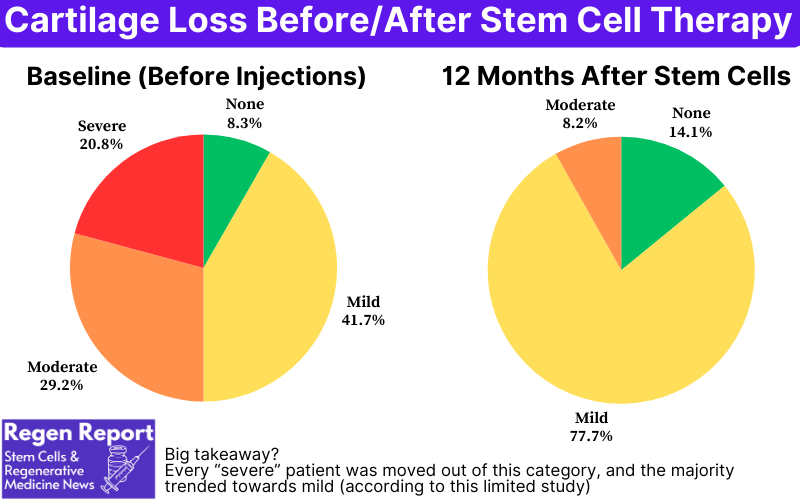
The authors mentioned these results:
- Significant functional improvement
- Significant pain reduction
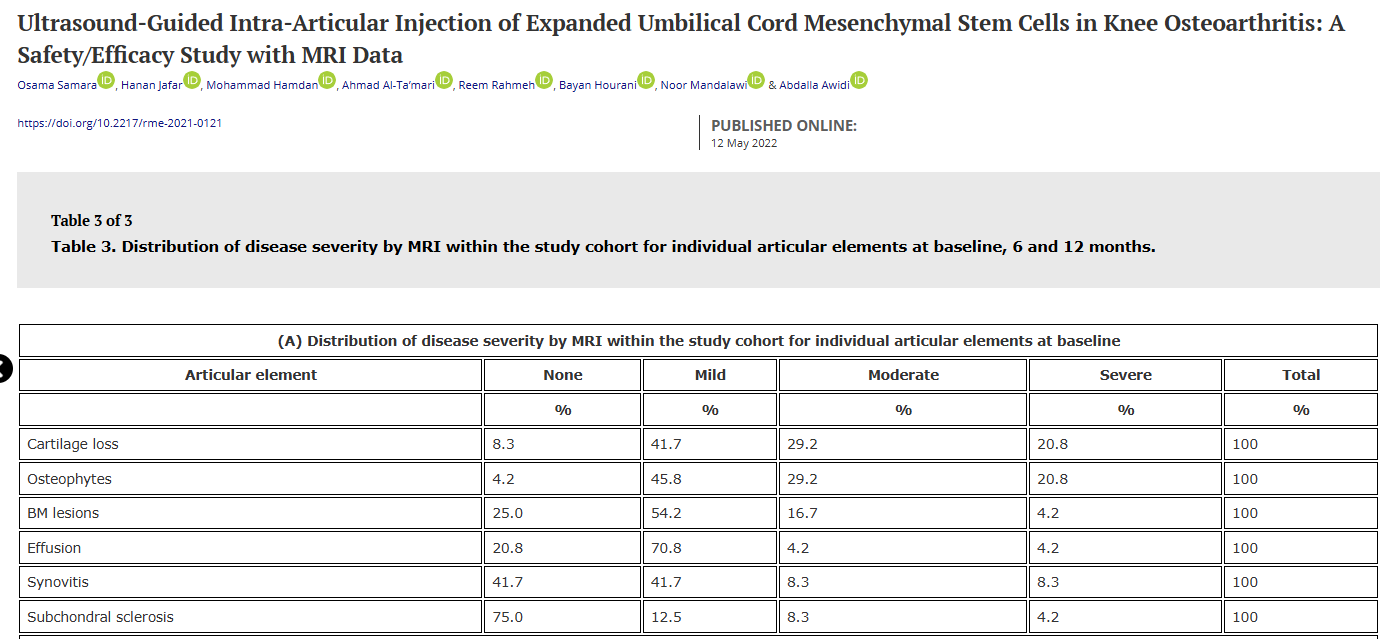
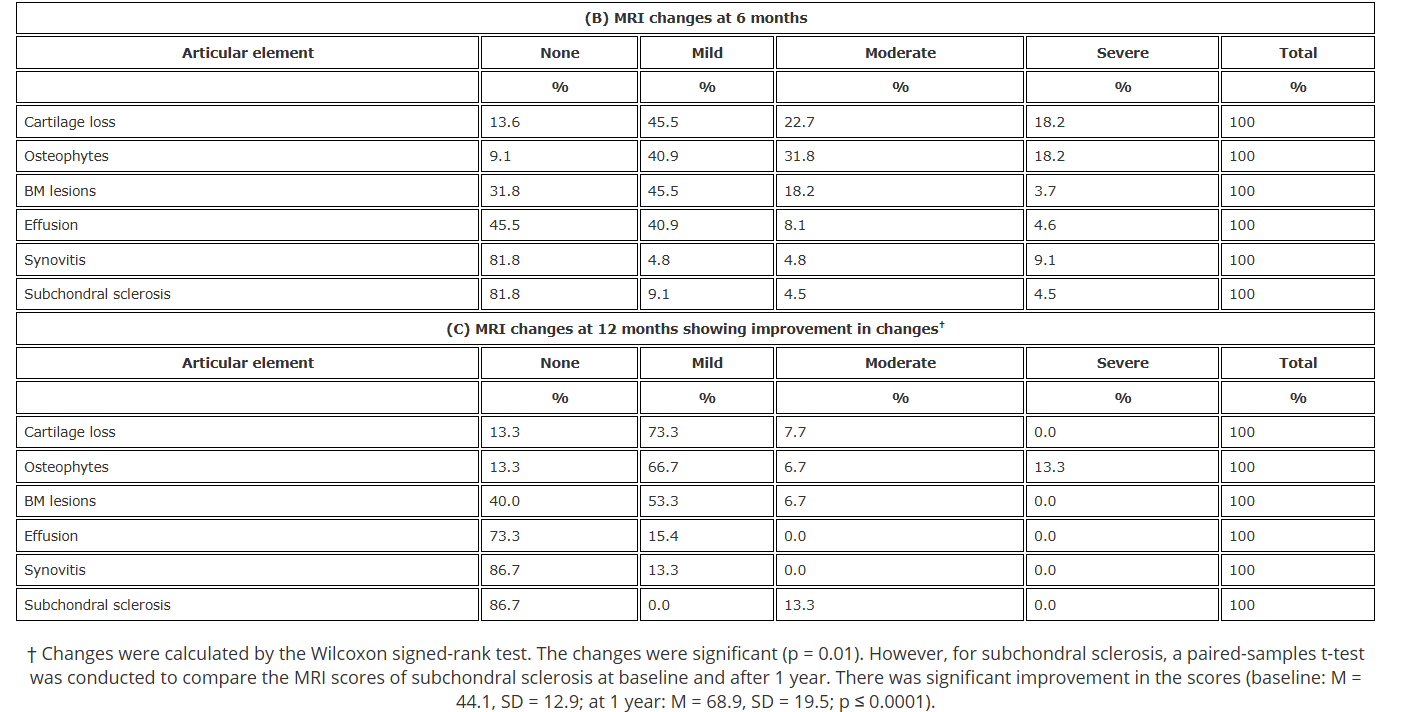
- Significant improvements found on follow-up MRI including
- Cartilage Loss
- Osteophytes (a.k.a. bone spurs, bony growths that form on bones)
- Bone marrow lesions (potentially painful changes in the bone’s tissue, which shows up on MRI)
- Effusion (fluid buildup in the joint)
- Synovitis (inflammation of the joint)
Table of all measured improvements:
In conclusion:
The authors found that 2 treatments of expanded Wharton’s Jelly spaced 1 month apart could be a potential future therapy for KOA.
Before taking on any regenerative therapy, especially those considered unproven and/or experimental, please talk with your doctor(s). This isn’t medical advice, simply an interpretation of the research.
Similar stories
 Wolwo Bio Subsidiary Receives Chinese Trial Authorization for Umbilical Cord Mesenchymal Stem Cell Therapy for Sepsis
 New Trial – Phase II Umbilical-Cord Stem Cells for Amyotrophic Lateral Sclerosis
 New Trial – Intranasal Stem Cells for Perinatal Brain Injury and Cerebral Palsy
 Made Scientific Acquires Resilience’s 85K-Square-Foot Cell Therapy Facility
Editor’s Picks
 Century Therapeutics Reports Sustained Glucose Control With iPSC-Derived Islets in Diabetic Mice, IND Soon
 Inside Cellular Intelligence: The Zuck-Backed AI Company That Acquired Novo’s Parkinson’s Cell Therapy
 Webinar: Scaling iPSC Therapies Without Scaling VariabilityOn-Demand
 Aspen Neuroscience Publishes Preclinical Data on Parkinson’s iPSC-Derived Cell Therapy