Inside Cellular Intelligence: The Zuck-Backed AI Company That Acquired Novo’s Parkinson’s Cell Therapy
Cellular Intelligence, backed by the Chan Zuckerberg Initiative, is building an AI model to predict how cells respond to signals over time, supported by a capsule platform that enables exponential experimentation. Here’s our interview with the founder on how it works, plans to advance Novo’s STEM-PD into Phase 2, and the path from in silico prediction to real-world cell therapy.
Regen Report: In late 2025, Novo shut down its cell therapy R&D efforts, leaving several high-profile programs without a home. One of those was STEM-PD, an embryonic stem cell-derived dopaminergic progenitor therapy for Parkinson’s.
A few months later, Cellular Intelligence (CI), a young “AI-native biotech” startup, acquired STEM-PD, which felt like a curveball. Who is CI, and why would an AI startup acquire one of the field’s most closely watched programs?
Stay Ahead in Regenerative Medicine
Thanks! Please confirm your email using the link we sent from Jeremy@RegenReport.com (check spam too please).
To understand this, you first have to understand what CI is building: an AI model to predict how cells transition from one state to another in response to signals. But training that model requires a type of data that largely doesn’t exist, partially because cell fate is so highly context-dependent.
The same signal can produce very different outcomes depending on the cell’s starting state, previous signals, concentration, timing, and order, yet most available datasets either map cells at a particular state or measure their response to isolated perturbations. They generally do not preserve the full history of signals and how that signaling history affected the outcome.
CI is generating that missing data through its proprietary capsule platform, which moves pluripotent stem cell colonies through sequences of signaling conditions while recording each capsule’s history. Its method has allowed CI to generate more than 1 million sequential signaling combinations and use the resulting data to train what it describes as a Universal Virtual Cell-Signaling Model, with the longer-term goal of designing and optimizing regenerative medicine protocols.
After demonstrating the capsule system, CI attracted over $70M in backing, including from the Chan Zuckerberg Initiative.
STEM-PD gives CI a clinical-stage proving ground for that thesis. The company plans to advance the existing therapy into Phase 2 while exploring whether its platform can make cell therapy development and manufacturing more predictive and scalable.
We sat down with CI’s founder, Micha Breakstone, to discuss how the capsule system works, what its models can already predict, where the technology still falls short, and how STEM-PD fits into CI’s larger plans.

Editor’s note – Since our interview, the STEM-PD investigators published the 12-month primary safety and interim efficacy results from its ongoing Phase 1/2 trial in Nature Medicine.
No serious adverse events were attributed to STEM-PD, and no tumor formation or graft-induced dyskinesias were reported; however, there was one participant death attributed to immunosuppression.
The study was small and not designed to establish efficacy, although investigators reported preliminary clinical signals and reductions in dopaminergic medication use.
Overview of Platform & Origin
Regen Report: Where did the idea of CI come from?
Micha: I co-founded Chorus.AI, an AI conversation intelligence company that sold for just under $600M in 2021. After that, the only rational thing was to become a full-blown masochist and enter biotech, so Dr. Allon Klein, a Harvard professor, two professors who were members of the National Academy of Sciences, and I began investigating AI applications in biology.
We hypothesized: if ChatGPT works by predicting the next word based on context and training data, could we do the same for cell biology? Is it possible to build a model that can predict how a cell will behave after a signal?
This is what CI is working on. It’s still in the alpha phase, but so far we’ve had surprising success not only in prediction but also in generating massive amounts of cell-signaling data.
Regen Report: How is your platform different from a traditional cell atlas?
Micha: Several groups are building cell atlases and large perturbation datasets. These provide snapshots of cell states and responses to interventions; they’re very useful, but only snapshots.
You cannot create a true movie of where the cell started, what it experienced along the way, and how those prior states influence what happens next, which is critical for cell biology and regenerative medicine. If we can map that context, a model may be able to predict which signals will move a cell toward a desired fate and ultimately intervene to guide or alter that.
At the simplest level, we want to give the model a cell’s current state + an external signal, and have it predict what will happen next. Rather than an atlas, CI is building the Garmin GPS to navigate between locations.
If we can do that, we may be able to predict answers to questions such as:
- How will this therapy behave in vivo?
- What if that patient’s cells have XYZ genetic or environmental alteration?
- How will it behave during manufacturing?
- Will it survive outside of the reactor?
- What temperature or oxygenation level will serve it best?
And many others that are top of mind when developing a cell or gene therapy.
Regen Report: You’ve mentioned learning the “grammar” of cell signaling. Can you explain that?
Micha: English has 26 letters and a finite vocabulary, while grammar provides rules for combining words into sentences to convey meaning.
That analogy maps surprisingly well onto cells. Biology has identified roughly 20 fundamental signaling pathways, along with a huge “vocabulary” of molecules that can modulate them.
Once you account for the timing, concentration, order, and combinations of signals, there are more than 10^300 possible signaling combinations, more than the number of atoms in the observable universe. The same pathways can produce very different cellular responses depending on those variables, much like small changes in wording or context can produce a very different meaning in a sentence.
Unfortunately, you can’t brute-force a search space that large, but if you understand the underlying grammar, you don’t need to try every possible sentence. Our goal is to learn those rules well enough to predict which signals will drive a cell toward the desired outcome.
Capsules Turn a Data Bottleneck Into an Exponential Experiment
Regen Report: What is the capsule platform, and how did it solve the data bottleneck?
Stay Ahead in Regenerative Medicine
Thanks! Please confirm your email using the link we sent from Jeremy@RegenReport.com (check spam too please).
Micha: To train a model, you need data. ChatGPT exists because of enormous amounts of internet text, but cellular biology doesn’t have that equivalent, as discussed above.
The problem in producing that dataset is scale. Imagine you wanted to take cells through five different interactions and generate 100 million unique experimental conditions. With traditional methods, the number of individual wells and experiments is just impractical. Even with robotics, several years, and unlimited money, you’d barely scratch the surface of the 10^300 possible signaling combinations.
Then Dr. Klein had the key insight: instead of taking the signals to the cells, take the cells to the signals.
We grow pluripotent stem cell colonies inside microscale capsules. Those capsules can then be split across different wells containing different signals, pooled back together, washed, randomized, and split again for another round. Along the way, each capsule accumulates a record of the conditions it experienced using our barcode system.

Here is a simple example in practice:
- Take a population of capsules and split them across 100 conditions.
- Pool them, then split them across another 100.
- You have now generated 10,000 unique combinations using only 200 wells.
- Repeat that process two more times, and four rounds of 100 conditions create 100 million possible signaling sequences from just 400 wells.
That creates a huge experimental space, and it was just the breakthrough we needed. With a linear increase in effort, the design creates an exponential increase in possible conditions. What might conceptually be a billion-dollar-scale project could potentially be reduced by roughly three orders of magnitude, which changes everything in training a machine learning model.
It’s the difference between trying to learn a topic from five books and learning it from the Library of Congress. It just doesn’t compare.
Regen Report: How do you keep track of what happened to each capsule?
Micha: I can’t go into too much detail on the barcoding tech because we’ve filed patents on it; however, Dr. Klein published some of the underlying concepts in his December 2025 work on Multi-Step Genomics.
Broadly, each capsule carries a barcode that lets us reconstruct its history by recording the sequence of signals it encounters as it moves through the split-and-pool process. That history can then be linked back to the resulting cell state, and, of course, all of this is fed into the model, giving it the context needed to learn and predict resulting cell states.
We demonstrated significant data production from this tech in late 2024, and even though that was all we had produced at the time, the Chan Zuckerberg Initiative (CZI) and others saw enough potential to back us.
The Results That Validated the Platform
Regen Report: Okay, the system could generate enormous amounts of data. But is any of that meaningful?
Micha: That was one of our first questions. In one of our early experiments, we exposed pluripotent stem cells to thousands of sequential conditions and analyzed the cells nine days later. Two things stood out:
- First, there were no “Frankenstein cells” (bizarre, biologically nonsensical states). Despite exploring a huge number of signaling combinations, the cells still followed biologically recognizable, or canalized, developmental trajectories.
- Second, we found cells spanning all three major germ layers, ectoderm, mesoderm, and endoderm, including the major cell types we would expect to see around that stage of development. That was the moment when we started wondering whether something had gone wrong with the analysis because the result looked almost too good.
We subsequently scaled that to more than 1 million signaling sequences, and the cells continued populating the expected major developmental lineages. As we increased the data density, we also began to see finer distinctions between cell states.
That was important because generating millions of conditions is useless if the biology falls apart at scale. Instead, the cells were still producing meaningful, recognizable states.
Regen Report: Did having the cell’s history improve the model?
Micha: This was another major validation.
We took the same data and analyzed it in two different ways. In one version, we treated the cells like a conventional perturbation experiment: look at their current state, apply a signal, and measure the result, while essentially ignoring what happened to the cell beforehand.

Then we compared that with a model that retained the cell’s temporal history, including the sequence of conditions it had experienced prior. This model increased the predictive power by roughly 30%. This was profound for our developmental biologists, who’ve spent their careers arguing that the cell’s history and context determine how it responds.
We suddenly had large-scale empirical evidence showing exactly that.
Regen Report: What else has been surprising in these experiments?
Micha: We’ve had several “holy moly” moments.
One example was its potential to predict states it hadn’t been trained on. The model was trained on normal, healthy cells. We ran internal tests on immortalized cancer cells, a context it had not seen during training, and found it outperformed state-of-the-art prediction methods.
That is particularly interesting because cancer is like a different dialect of normal cellular language. Many of the underlying pathways are the same, but they are operating in abnormal states and contexts.
Similar to ChatGPT, there are a lot of “black boxes,” or unknowns, about how/why these models produce their results. It’s far from perfect, and we’re in the very early stages, but performing well in a domain outside of the original training data is exactly the kind of generalization you hope to see at this stage.
A Powerful Model That Still Needs Much More Data
Regen Report: What can the model actually predict today?
Micha: The model can already recover known biology, and we’ve built an agentic reasoning layer on top of it which queries biological ontologies, published literature, and other knowledge sources.
One way we’ve tested the model is by taking a known differentiation protocol, essentially a sequence of compounds, exposure times, and conditions, removing part of that protocol, and asking it to reconstruct what’s missing. I want to be careful stamping a universal number on this because it depends on exactly how you define the task. But in one of our recent runs, the model correctly recovered five of six known transitions, or roughly 83%.
Unexpectedly, the system has been producing hypothetical protocols too. We genuinely don’t know if this is novel biology or hallucinations, but we’re running validation experiments to find out. Even if 10% of those are validated, that would mean a machine has generated a new, meaningful biological idea that survives in the real world. That’s a breakthrough we hope to achieve.
Regen Report: With all of that, where is it failing?
Micha: So there are different levels of prediction. Right now, we can remove pieces of a known biological “sentence” and have it recover them. The much harder problem is removing the entire sentence and asking it to generate an answer from scratch. That requires an enormous amount of additional data, which we’re producing but will take time.
I describe where we are today as roughly GPT-1.5, meaning we can see enough capability to understand how powerful this could become, but we are nowhere near the final model. These early models focus on predicting how a single signal changes a cell across various starting contexts. To get to a GPT-3 moment, it’ll need to handle combinations of signals, broader contexts, and eventually continuous-time modeling, where you can ask what state a cell will occupy at essentially any point along its trajectory.
One encouraging finding is that our early results appear to follow scaling laws similar to those seen in large language models: as we add more data, predictive performance and generalization improve.
It’s exciting because we have some indication of how much more data we need to get there; equally terrifying because generating it could cost hundreds of millions of dollars.
Regen Report: Beyond generating data, what other challenges do you anticipate?
Micha: We are also trying to help build a new category of cell-based regenerative medicine, and understanding the biology is really only a small portion of that.
There will be manufacturing and regulatory hurdles, and there’s a perception problem in the field. Medicine is conservative, for good reason. Countless promising animal experiments have failed to translate to humans, along with plenty of snake oil and exaggerated claims. So even if we generate results that look extraordinary, we still have to prove them rigorously and earn the trust of physicians, scientists, regulators, and eventually patients.
Really, the business and strategic teams have their hands full just as much as our scientists.
STEM-PD Proving Ground
Regen Report: Speaking of that, how did CI end up acquiring STEM-PD from Novo Nordisk?
Micha: Novo had a competitive bid, approached us as a potential buyer, and we were fortunate enough to win. For us, this was a no-brainer. STEM-PD represented 20 years of meticulous science, and Nature Medicine named it one of the trials expected to shape medicine in 2024. Many consider it one of the leading regenerative medicine programs.
Parkinson’s is, relatively speaking, a very intuitive cell-replacement problem. The disease involves progressive loss of dopaminergic neurons in the brain’s substantia nigra, resulting in dopamine deficiency. At a very high level, the idea is: those cells are lost, so replace their function.
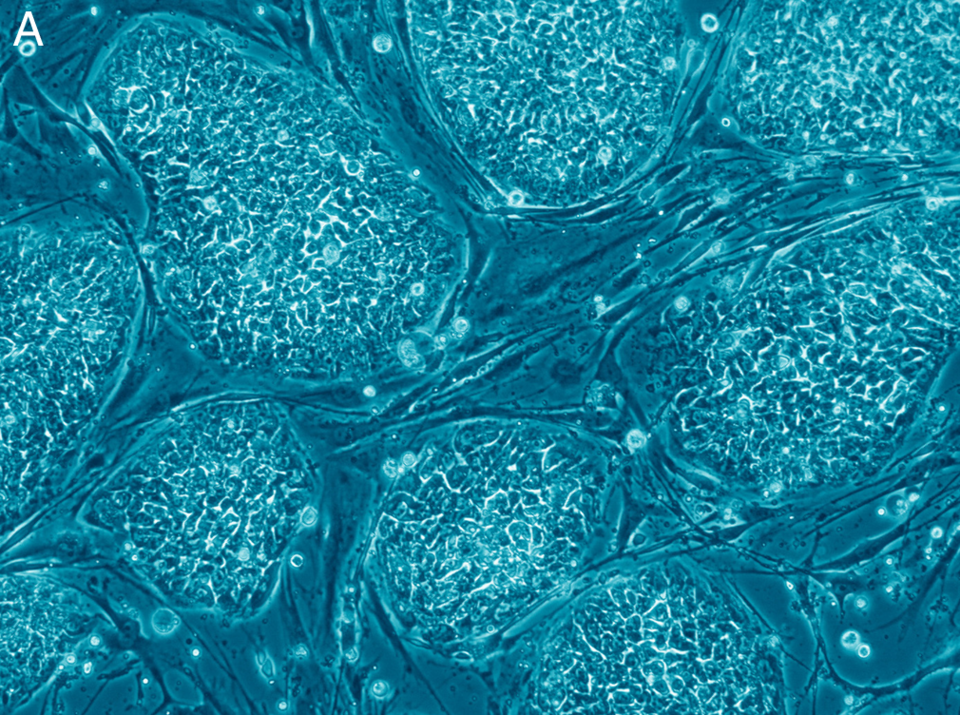
STEM-PD consists of human embryonic stem cell-derived ventral midbrain dopaminergic progenitors transplanted into the putamen. They are not mature neurons at transplantation; the intent is for them to survive, mature into dopaminergic neurons, reinnervate the target region, and restore dopaminergic signaling.
Regen Report: Why is STEM-PD such a good fit for CI?
Micha: We’re using it to pursue two things in parallel. First, we will advance it to Phase 2 without changing the investigational product. At the same time, we’ll use our platform to develop a more scalable manufacturing process.
Think of Novo’s existing process as a handwritten book. If you need 100,000 copies, you’ll need to type and print them. The challenge is that the version must still contain the same information as the handwritten one, which is where our model becomes particularly useful. We can study the relationship between the existing manufacturing and the resulting cell state, then attempt to translate that into a more scalable process while preserving the characteristics that define the investigational product.
And, critically, we ultimately need the regulatory agency to agree that what comes out of that new process remains sufficiently equivalent to the original product. Otherwise, you risk having to restart clinical development.
If we can pull that off, it could potentially save us years of development time that might otherwise be needed to prove the platform’s value.
We also see a virtuous cycle. Every manufacturing run produces a new dataset which can feed back into the platform, improving future runs.
Regen Report: 10 years from now, what impact do you think CI will have?
Micha: Someone else said this: what’s the difference between a charlatan and a visionary? 5 years. Hopefully, we’re on the right side of that coin.
If we’re successful, I think we’ll have two broad impacts:
Scientifically, I hope we are the company that built the foundation model for understanding, predicting, and ultimately controlling cellular behavior, shaping and accelerating this new field.
For the general population, I think we’ll have a huge impact on healthspan. I am very careful about the word “longevity,” but the ambition is to use in silico models to understand and control cells, delivering life-changing therapies that help people remain healthier for longer.
Regen Report: Special thanks to Dr. Breakstone and the Cellular Intelligence team for the interview. Wish them luck with STEM-PD’s Phase 2! You can learn more on their website here.
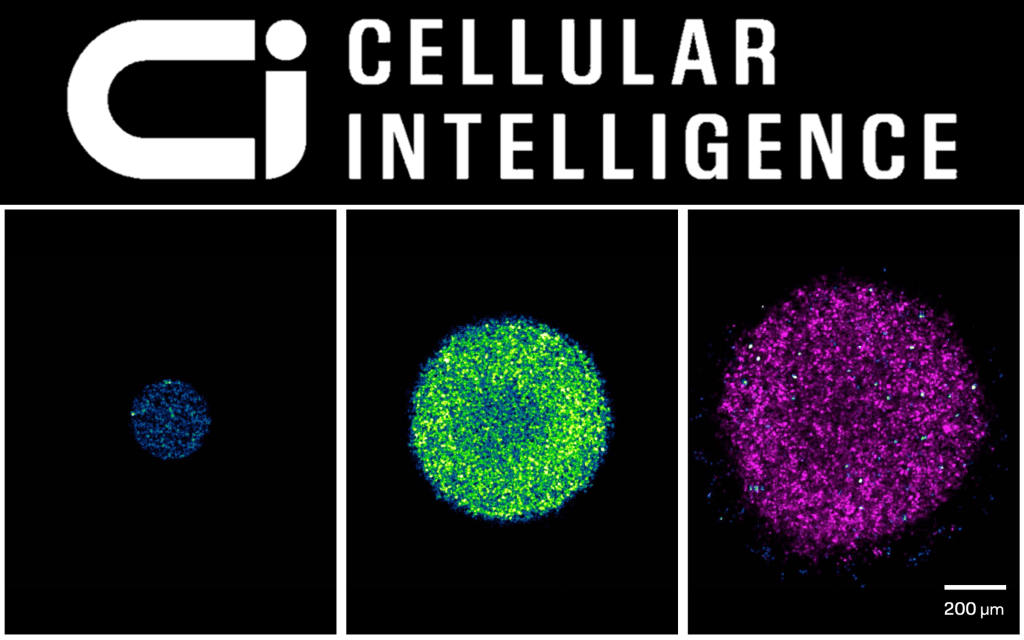
Featured Image Credit: Time-lapse images of human iPS cells differentiating toward a musculo-vertebral precursor fate, with green and purple fluorescent reporters marking distinct stages of maturation. (Credit: K. Zhu, Pourquié Lab, courtesy of Cellular Intelligence)