
Orca Bio Publishes Long-Term Survival Data from TREGZI Blood Stem Cell Therapy
The retrospective analysis compared 76 phase 1b participants with 360 historical registry patients selected using similar age, diagnosis, conditioning and donor-match criteria.
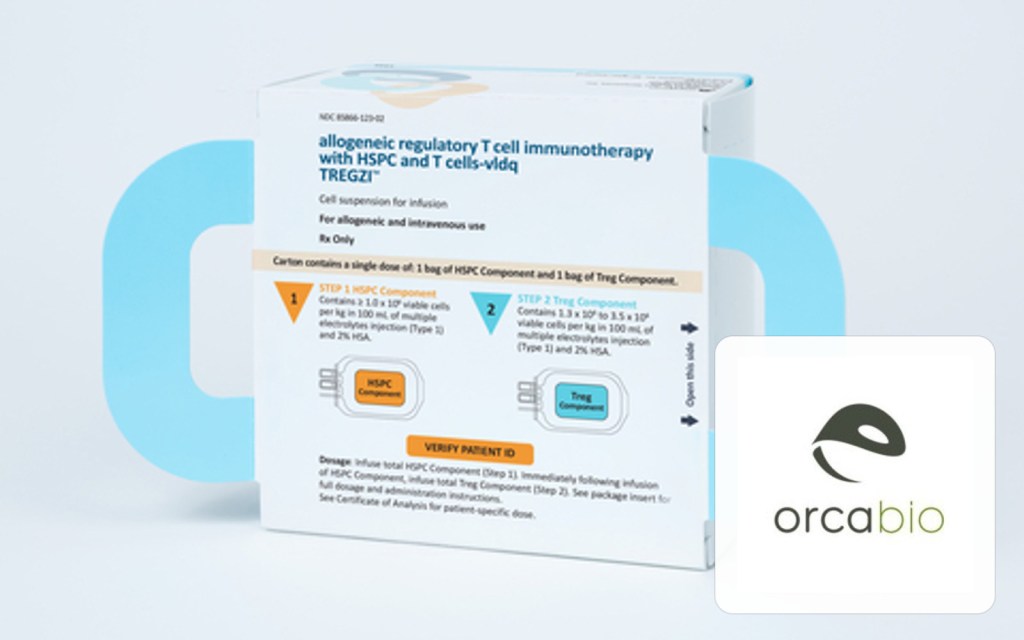
Key Points
- A retrospective analysis compared 76 Phase 1b participants treated with TREGZI plus tacrolimus with 360 historical registry patients who received post-transplant cyclophosphamide-based prophylaxis.
- Three-year overall survival was 83% in the TREGZI group and 66% in the historical comparison group.
- TREGZI is indicated for matched-donor hematopoietic stem cell transplantation in adults with hematologic malignancies receiving myeloablative conditioning.
Following its recent FDA approval, Orca Bio announced the publication of a retrospective analysis evaluating three-year overall survival (OS) among patients with hematologic malignancies. The analysis compared TREGZI plus tacrolimus with conventional allogeneic (donor derived) hematopoietic stem cell transplantation (allo-HSCT) plus post-transplant cyclophosphamide (PTCy)-based graft-versus-host disease (GVHD) prophylaxis.


The findings were published in Transplantation and Cellular Therapy. The TREGZI group had higher OS over three years of follow-up than the historical PTCy group, with a hazard ratio of 0.41 and a log-rank p-value of 0.003.
- TREGZI group: OS was 96% at one year (95% CI: 88%-99%), 86% at two years (95% CI: 76%-92%) and 83% at three years (95% CI: 73%-90%). The group included 76 patients.
- Historical PTCy group: OS was 81% at one year (95% CI: 77%-85%), 72% at two years (95% CI: 67%-77%) and 66% at three years (95% CI: 60%-71%). The group included 360 patients.
Tacrolimus plus methotrexate was historically the predominant standard of care for preventing GVHD after allo-HSCT. Other approaches include PTCy-based regimens and TREGZI. In clinical studies, both TREGZI plus tacrolimus and allo-HSCT plus PTCy showed lower cumulative GVHD incidence than tacrolimus plus methotrexate.
Study Design and Eligibility
The analysis used long-term survival follow-up from the multicenter Precision-T Phase 1b study of TREGZI in hematologic malignancies. Three-year OS outcomes were compared with a historical CIBMTR-NMDP registry cohort of patients who received an allogeneic stem cell transplant with PTCy-based GVHD prophylaxis.
The comparative analysis used criteria similar to those of the TREGZI Precision-T Phase 3 trial. Eligible patients were 65 years of age or younger and had intermediate- or high-risk acute myeloid leukemia, acute lymphoblastic leukemia in complete remission, or myelodysplastic syndrome. Patients received a myeloablative conditioning regimen and had an 8/8 HLA-matched donor.
Safety Information
- Graft failure: Graft failure has occurred after TREGZI administration. Screen recipients for antidonor antibodies that may prevent engraftment. Monitor patients closely for laboratory evidence of hematopoietic recovery.
- Graft-versus-host disease: Acute and chronic GVHD, including life-threatening and fatal cases, occurred following treatment with TREGZI. Acute GVHD can manifest as maculopapular rash, gastrointestinal symptoms and elevated bilirubin. Chronic GVHD may include skin rash, mouth sores, dry eyes, liver inflammation, scar tissue in the skin and joints, and lung damage. Treat patients with a single-agent calcineurin inhibitor as prophylaxis to decrease the risk of GVHD. Monitor for signs and symptoms and treat GVHD if it develops.
- Infusion reactions: Infusion reactions may occur during or after treatment. Serious hypersensitivity reactions, including anaphylaxis, may occur in response to DMSO, human serum albumin, Dextran or murine protein present in TREGZI. Monitor patients during and after administration. If a reaction occurs, pause the infusion and provide supportive care as needed. Premedicate patients with antipyretics and histamine antagonists to reduce the incidence and intensity of infusion reactions.
- Secondary malignancies and malignancies of donor origin: These malignancies may occur following treatment. Post-transplantation lymphoproliferative disorder (PTLD) can develop years after transplantation and is usually fatal if untreated. Serial monitoring of blood for EBV DNA may be warranted in patients with persistent cytopenias. No patient treated with TREGZI has developed PTLD. Monitor for secondary malignancies and malignancies of donor origin.
- Transmission of infectious agents: TREGZI is derived from human donor blood and manufactured using animal-derived reagents. Transmission risks may remain despite donor screening or testing. Potential agents include human immunodeficiency virus, human T-cell lymphotropic virus types 1 and 2, hepatitis B virus, hepatitis C virus, Treponema pallidum, Trypanosoma cruzi, West Nile virus, cytomegalovirus, transmissible spongiform encephalopathy agents and vaccinia. Monitor patients for signs and symptoms of infection, perform appropriate tests and treat as clinically indicated.
The most common adverse reactions, with an incidence of at least 20%, were mucositis, diarrhea, rash, viral infections, infections with an unspecified pathogen, abdominal pain, vomiting, nausea, bacterial infections, hemorrhage, acute GVHD, edema and fungal infections.
The most common Grade 3 or 4 laboratory abnormalities, occurring in at least 20% of patients, were decreased lymphocyte, platelet, leukocyte, neutrophil and hemoglobin levels.
Indication and Use
TREGZI is indicated for use in matched-donor hematopoietic stem cell transplantation with a myeloablative preparative regimen for hematopoietic and immunologic reconstitution and to improve chronic graft-versus-host-free survival in adults with hematologic malignancies.
Want to keep up on regenerative medicine? Get the weekly newsletter here.