Wharton’s Jelly-Derived Mesenchymal Stem Cells Shows Promise for Traumatic Brain Injury: Results from Phase I Study (2024)
Traumatic brain injury (TBI) occurs when trauma disrupts normal brain functions, potentially causing severe physical, cognitive, and emotional impairments. Researchers are exploring stem cells as a possible treatment because these cells might help prevent further brain deterioration and encourage the regeneration of damaged brain tissue. Specifically, Wharton’s Jelly-derived mesenchymal stem cells (WJ-MSCs) have reportedly shown […]

Traumatic brain injury (TBI) occurs when trauma disrupts normal brain functions, potentially causing severe physical, cognitive, and emotional impairments.
Researchers are exploring stem cells as a possible treatment because these cells might help prevent further brain deterioration and encourage the regeneration of damaged brain tissue. Specifically, Wharton’s Jelly-derived mesenchymal stem cells (WJ-MSCs) have reportedly shown promising results in improving neurological recovery after injury.
Stay updated on Neuroregeneration news
Thanks! Your signup has been saved.
Here’s a breakdown from a study in 2024:
Study Population:
This study involved six TBI patients, four males and two females. Participants were relatively young, aged between 21 and 27 years.
Intervention:
Each patient received Wharton’s Jelly-derived mesenchymal stem cells (WJ-MSCs) at a dosage of 1 × 10⁶ cells per kilogram of body weight. These cells were administered using three different methods: intrathecally (into the spinal canal), intramuscularly, and intravenously.
Each patient underwent a total of six sessions, receiving the same dosage through all three routes each time.
Results:
Safety results indicated only minor and brief adverse effects, including low-grade fever, mild headaches, and muscle soreness at the injection sites. These symptoms resolved within 24 hours. Over one year of follow-up, researchers reported no additional safety issues or significant adverse events.
Regarding efficacy, the researchers reported significant improvement across multiple assessments:
- Spasticity (muscle rigidity) was measured using the Modified Ashworth Scale (MAS). Scores significantly improved on both sides of the body (P < 0.001).
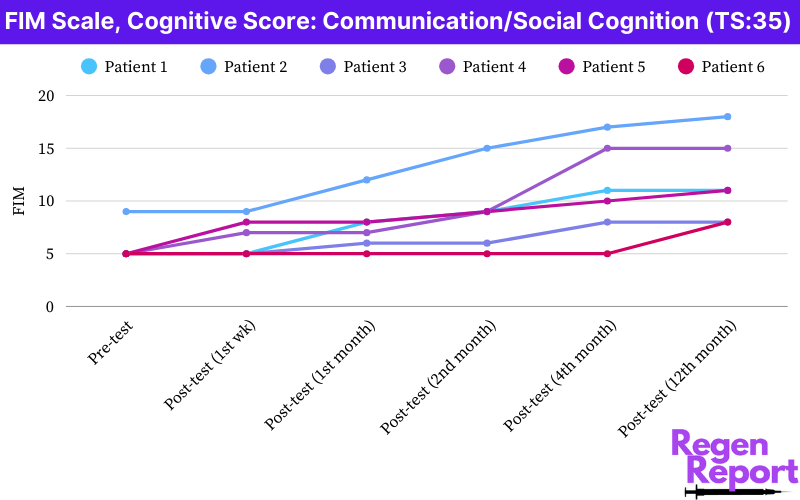
- Functional Independence Measure (FIM) scores improved significantly in both motor skills (P < 0.05) and cognitive abilities (P < 0.001).
- Motor function, according to the Medical Research Council Muscle Strength Scale, improved noticeably.
- Karnofsky Performance Status, used to evaluate overall quality of life and general performance, also improved significantly after treatment (P < 0.001).
Discussion:
Researchers concluded that “cell transplantation has a safe, effective and promising future in the management of TBI.” They noted improvements in cognitive function, motor skills, muscle strength, and spasticity, suggesting that WJ-MSCs can effectively help in the recovery process for TBI patients and justify further research.
Similar stories
 Wolwo Bio Subsidiary Receives Chinese Trial Authorization for Umbilical Cord Mesenchymal Stem Cell Therapy for Sepsis
 New Trial – Phase II Umbilical-Cord Stem Cells for Amyotrophic Lateral Sclerosis
 New Trial – Intranasal Stem Cells for Perinatal Brain Injury and Cerebral Palsy
 Made Scientific Acquires Resilience’s 85K-Square-Foot Cell Therapy Facility
Editor’s Picks
 Century Therapeutics Reports Sustained Glucose Control With iPSC-Derived Islets in Diabetic Mice, IND Soon
 Inside Cellular Intelligence: The Zuck-Backed AI Company That Acquired Novo’s Parkinson’s Cell Therapy
 Webinar: Scaling iPSC Therapies Without Scaling VariabilityOn-Demand
 Aspen Neuroscience Publishes Preclinical Data on Parkinson’s iPSC-Derived Cell Therapy