Stem Cell Trial: BlueRock Launches Study of iPSC-Derived Photoreceptor Cell Therapy for Inherited Retinal Diseases

The trial will test whether lab-grown photoreceptor cells can be safely transplanted to help people with inherited vision loss.
BlueRock Therapeutics has launched a Phase 1/2a clinical trial (CLARICO) to evaluate the safety and effects of OpCT-001, a stem cell therapy for adults with primary photoreceptor diseases. The study is currently recruiting at sites including the University of Miami (Bascom Palmer Eye Institute) and the University of Wisconsin.

Bayer AG Inaugurates First Cell Therapy MFTG Facility In California » World  Business Outlook

Photoreceptor diseases, such as retinitis pigmentosa, cone-rod dystrophy, and Usher syndrome, are inherited retinal conditions that lead to the degeneration of light-sensitive cells in the eye. They often result in progressive vision loss and, ultimately, legal blindness. There are no approved treatments that restore lost photoreceptors, driving interest in cell-based regenerative therapies.

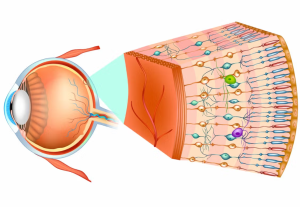
In this trial, participants will receive OpCT-001, which consists of photoreceptor precursor cells derived from human induced pluripotent stem cells (iPSCs). The therapy is delivered by subretinal injection directly into the affected area of the retina.

The study is divided into two parts:

  • Phase 1 (dose escalation): Four planned dose levels of OpCT-001 will be tested across four cohorts. Each cohort will include approximately three to six participants, all of whom are legally blind. The dose escalation uses a standard 3+3 design to assess safety and tolerability.
  • Phase 2a (dose expansion): Two selected dose levels, based on results from Phase 1, will be evaluated in up to 15 participants per cohort (total maximum: 30). Participants and investigators (except surgical teams) will be masked to the assigned dose.
(Image Credit – BlueRockTherapeutics)

The primary objective is to assess the incidence and severity of ocular and non-ocular treatment-emergent adverse events (TEAEs) through 52 weeks after treatment. Secondary objectives include changes in the outer retinal layer thickness, as measured by spectral domain optical coherence tomography (SD-OCT), in the treated portion of the study eye over the same period.

The researchers note that OpCT-001 is a first-in-human application of iPSC-derived photoreceptor precursor cells for inherited retinal diseases. The expectation is that transplanted cells may engraft and provide functional benefit, though the main focus in early phases is on safety. According to the trial sponsors, OpCT-001 is being positioned as a potential regenerative approach for a group of disorders that are currently considered incurable. The therapy leverages advancements in iPSC technology, allowing for the scalable production of photoreceptor precursors with the goal of replacing or supporting lost retinal cells. The estimated primary completion date for the study is October 2029, with full study completion targeted for October 2030. Want to keep up on regenerative medicine trials? Get the weekly newsletter here.
If you found this post helpful, would you mind sharing it? ⬇️ 

Related:

Keck Medicine of USC is participating in a small Phase 1 clinical trial evaluating the safety and early effectiveness of implanting induced pluripotent stem cell-derived dopamine-producing cells into the brain for Parkinson’s disease.
A new kit aims to streamline 3D iPSC transfection, offering higher efficiency and lower cytotoxicity for researchers and developers.
Lineage will evaluate the new gene-edited iPSC line for immune compatibility and manufacturing potential before pursuing exclusive rights with Factor Bioscience.
The partnership aims to streamline production and quality testing of gene-edited hematopoietic stem cell therapies for HIV and rare diseases.
The new open source gene editing services are ready to help iPSC developers create off-the-shelf allogeneic cell therapies at scale.

The Latest:

The company has emerged from stealth mode with a new $21 million Series A tranche (bringing total funding to $42 million), appointed Ron Cohen, M.D. as CEO, and reported early Phase 1b/2a Parkinson’s neuron replacement therapy data showing motor improvements
This is part of J&J's $55B investment in US manufacturing over the next few years.
The company is developing autologous cell therapies for fecal and urinary incontinence tied to weakened sphincter muscles.
ENCell's umbilical cord-derived mesenchymal stem cell therapy candidate EN001 received FDA orphan drug designation for Duchenne muscular dystrophy, marking its second designation after Charcot-Marie-Tooth disease and positioning it as a potential platform therapy for rare neuromuscular diseases.
Arizona lawmakers are advancing SB 1214, a bill that would allow certain non-FDA-approved stem cell and birth tissue therapies, with limitations.
They've completed enrollment of 99 patients across 15 U.S. sites in its Phase 2 trial evaluating BRTX-100, a mesenchymal stem cell therapy for chronic lumbar disc disease.
Zemcelpro (dorocubicel) is designed to support blood and immune system recovery after myeloablative conditioning in patients with hematologic diseases.
GwoXi’s FDA filing aims to support cell therapy and exosome developers with a standardized, traceable stem cell source.
The lipid microbubble platform aims to enhance cell therapy manufacturing, adapted from its clinically validated ultrasound imaging tech.
The company says its platform may fundamentally change how cartilage loss and degenerative joint disease is treated globally.
Based on their results in Korea/Japan, they received a Phase 3 fast track in the USA, and hope to show true cartilage regeneration. Potentially historic moment for the industry coming.
The new registry aims to address evidence gaps and track long-term outcomes for orthobiologic treatments.

Discover more from Regen Report

Subscribe now to keep reading and get access to the full archive.

Continue reading

Stay updated on Regenerative Medicine