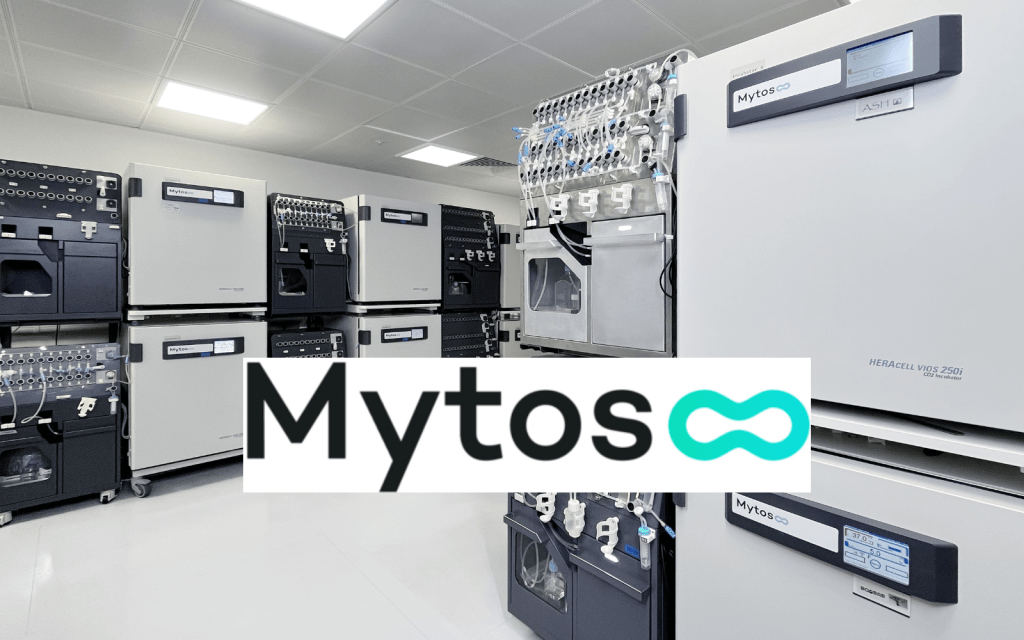
Mytos has announced new manufacturing collaborations with StemSight, Rinri Therapeutics, and Novadip. All three companies plan to integrate Mytos’ iDEM automated cell manufacturing platform to scale the production of various cell types for therapeutic use, including applications in ocular diseases, hearing loss, and bone defects.
The iDEM platform is designed as a closed, automated system for consistent, GMP-compatible (Good Manufacturing Practice) production of human iPSC cells. This approach aims to reduce cost, variability, and time to clinic for biotech companies.
- StemSight (Finland) will use the iDEM platform to advance its lead candidate for limbal stem cell deficiency—a rare cause of corneal blindness—by developing induced pluripotent stem cell (iPSC)-derived corneal stem cell therapies.
Dr. Laura Koivusalo, CEO of StemSight, said, “We’ve always prioritized cost-efficiency and scalability in our manufacturing. Mytos offered a unique and practical bridge from manual to automated production, even at an early stage. Their platform enables a globally scalable process that aligns with our goal of reaching patients around the world.” - Rinri Therapeutics (UK) will incorporate the automated platform for the production of its otic neural progenitor cell therapy targeting sensorineural hearing loss (SNHL).
According to Dr. Terri Gaskell, CTO of Rinri Therapeutics, “As our lead product, Rincell-1 for sensorineural hearing loss, enters the clinic, manufacturing precision and consistency are critical. With Mytos, we have the opportunity to seamlessly automate our existing process without having to change the biology. This is critical to laying the groundwork for future scale-up and global supply as we aim to bring a transformative therapy to millions affected by hearing loss.” - Novadip (Belgium) is evaluating the iDEM platform for scaling production of autologous products for large bone defects using adipose-derived stem cells.
Dr. Neil Johnson, CTO of Novadip, stated, “Mytos enables us to increase the output of our existing facilities, without having to delay scaling to build out new capacity. This partnership is an important step as we move closer to delivering regenerative bone therapies to patients who currently have few treatment options.”

The company notes that these collaborations reflect a broader industry shift toward automation as advanced cell therapies mature.
According to Mytos CEO and Co-Founder Ali Afshar, Ph.D., “Our mission at Mytos is to scale regenerative medicine to millions of patients, by removing the scalability and cost challenges of manual manufacturing. These three partners represent very different cell types and therapeutic areas, yet each saw the same thing in Mytos, namely our robust, scalable, automated platform that can take them from early clinical trials to commercial-ready manufacturing. It’s an exciting validation of our technology and our long-term vision.”
Want to keep up on regenerative medicine? Get the weekly newsletter here.