Hopstem Bio Nabs Phase 2 Approval for its iPSC-Derived Neural Cell Therapy for Chronic Ischemic Stroke
Their Chinese Phase 1 reportedly showed motor improvement in 90% of patients. With that data in hand, the FDA is allowing them to move forward out West.

Key Points
- Hopstem Biotechnology has FDA clearance to begin a U.S. Phase 2 bridging study for hNPC01 in chronic motor dysfunction after ischemic stroke, with a plan to expand into an adaptive Phase 2/3 pivotal program.
- hNPC01 is an induced pluripotent stem cell (iPSC)-derived allogeneic (donor derived) forebrain neural progenitor cell therapy delivered by stereotactic intracerebral transplantation.
- Hopstem cited Phase 1 data from China showing a manageable safety profile in 23 patients, with longer follow-up continuing to assess motor outcomes.
Hopstem Biotechnology, a Chinese cell therapy company, has received FDA approval to move hNPC01, its iPSC-derived neural cell therapy, into a U.S. Phase 2 dose-bridging, randomized, controlled, double-blinded clinical trial for chronic motor dysfunction caused by ischemic stroke.
Stay Ahead in Regenerative Medicine
Thanks! Your signup has been saved.
The update follows a recent End-of-Phase 1 meeting with the FDA. According to Hopstem, the agency aligned with the company on key elements of an accelerated clinical pathway for hNPC01. Hopstem also said the program will use a rolling meeting process tied to interim analysis and Fast Track status to refine Phase 3 design details, including sample size, as the study progresses.
Product and prior clinical data
Unfortunately, the company is a bit difficult to research as their site doesn’t seem accessible from the US, but with a handy Taiwanese VPN, I was able to find some info:
hNPC01 is an induced pluripotent stem cell (iPSC)-derived allogeneic (donor derived) forebrain neural progenitor cell product being developed for chronic dysfunction after stroke and other neural injuries. The therapy is delivered through stereotactic intracerebral transplantation. Hopstem says the cells are intended to differentiate into neurons and glial cells and support neural circuit reconstruction.
Stroke remains a major source of disability worldwide, and many patients live with persistent motor impairment long after the acute event. Hopstem is targeting chronic ischemic stroke patients with lasting motor dysfunction, an area where treatment options remain limited.
Hopstem said its Phase 1 trial in China enrolled 23 patients whose stroke onset ranged from 6 months to 5 years before treatment. The company reported no dose-limiting toxicity, abnormal overgrowth, or tumorigenesis through ongoing follow-up. It also said participants who remained in follow-up had completed 18 months of safety monitoring, with some patients followed for up to 2 years.
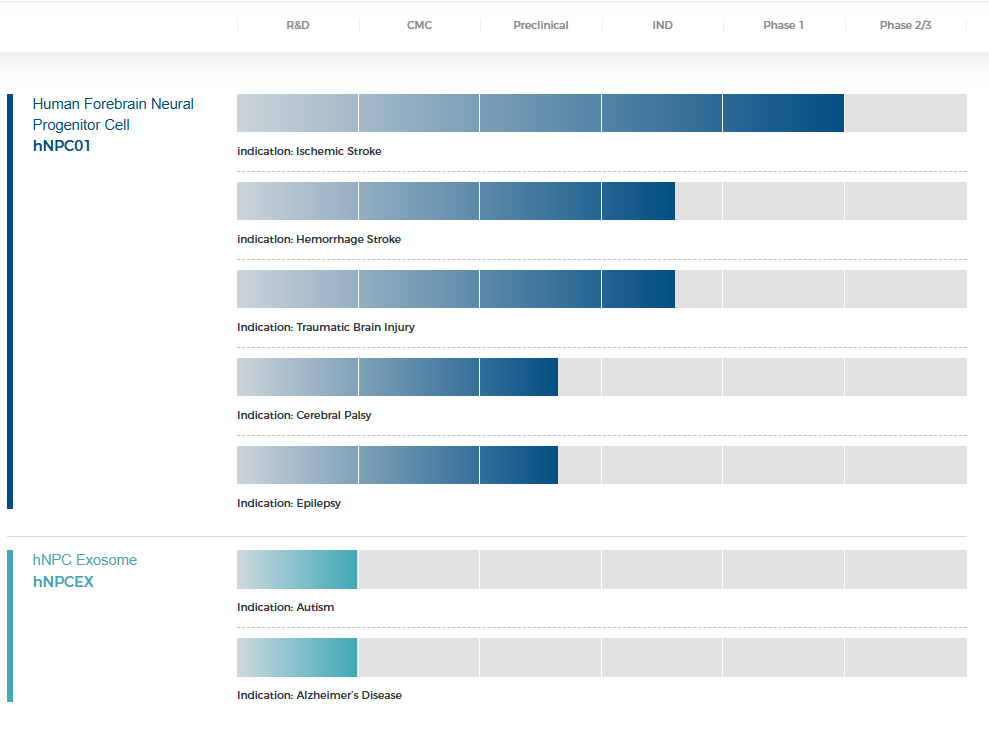
Additionally, here’s a screenshot from their pipeline page, it appears they’re working with other conditions as well:
And they have a video from their page in English, seen here:
What says comes next
The company reported that 18-month follow-up data showed continued motor improvement in 90% of followed patients compared with the 12-month visit, while patients with 2-year follow-up had reached what Hopstem described as a stable efficacy plateau without decline. Those findings were cited by the company as support for the next stage of U.S. development.

Dr. Shuning Zhang, Vice President of Medical Affairs at Hopstem, stated: “The smooth progress and outcomes of this meeting with FDA have exceeded our expectations. This accelerated development pathway granted by the FDA not only allows hNPC01 to bypass redundant Phase 1 clinical development in the United States, but also saves the waiting time and redundant enrollment between the two phases through the seamless adaptive design of Phase 2/3 trials, which can significantly improve the efficiency of clinical development. The FDA’s endorsement of core protocol elements, including patient population, dose selection, clinical endpoint settings, statistical plan, without raising any safety concerns, has cleared critical obstacles for the efficient advancement of subsequent international multicenter studies.
The adoption of adaptive design enables the dynamic accumulation of clinical data and protocol optimization, maximizing R&D efficiency while ensuring the scientific validity of the study. To our knowledge, this is the first case in the pluripotent stem cell field where U.S. Phase 1 clinical trials are waived based on Chinese Phase 1 data, and also the first China-developed pluripotent stem cell product approved overseas to bridge into pivotal clinical trial. This not only marks a significant breakthrough in the clinical development of hNPC01, but also provides highly valuable practical reference for the international clinical pathway of China’s innovative cell therapy products. Our clinical team will strictly adhere to international standards, efficiently advance the conduct of the study, focus on addressing the unmet needs of patients, and verify the product’s value with solid clinical data.”
Hopstem said hNPC01 has investigational approvals in both China and the United States.
Want to keep up on regenerative medicine? Get the weekly newsletter here.
Similar stories
 Encellin and Breakthrough T1D Planning Phase 1 of Immune-Protected Cell Therapy for Type 1 Diabetes
 Webinar: Scaling iPSC Therapies Without Scaling VariabilityOn-Demand
 Aspen Neuroscience Publishes Preclinical Data on Parkinson’s iPSC-Derived Cell Therapy
 Made Scientific Acquires Resilience’s 85K-Square-Foot Cell Therapy Facility
Editor’s Picks
 Century Therapeutics Reports Sustained Glucose Control With iPSC-Derived Islets in Diabetic Mice, IND Soon
 Umbilical Cord Mesenchymal Stem Cell Injections Lower Pain Scores More Than Hyaluronate in 50-Patient Severe Knee Osteoarthritis Trial
 Stempeutics Nabs US Patent for Osteoarthritis Treatment Combining Bone Marrow Stem Cells and Hyaluronic Acid
 Novadip Secures €10.4M for Pivotal Phase 3 Bone Repair Cell Therapy Trial