Made Scientific and CARR Biosystems Partner on Single-Use Centrifugation for Cell Therapy Manufacturing
At its East Norriton facility, Made Scientific will use the systems to harvest, wash and concentrate cells alongside 3D bioreactors of up to 200 liters.
Key Points
- Made Scientific will deploy CARR Biosystems’ UniFuge single-use centrifugation systems at two facilities for mesenchymal stem cell and feeder cell manufacturing.
- The systems will support cell harvest, washing and concentration alongside Made Scientific’s 3D bioreactor platforms, including capacity of up to 200 liters at East Norriton.
- The companies plan joint development studies using CARR’s UFMini benchtop system, and Made Scientific will serve as a preferred CDMO for CARR customers evaluating the platform.
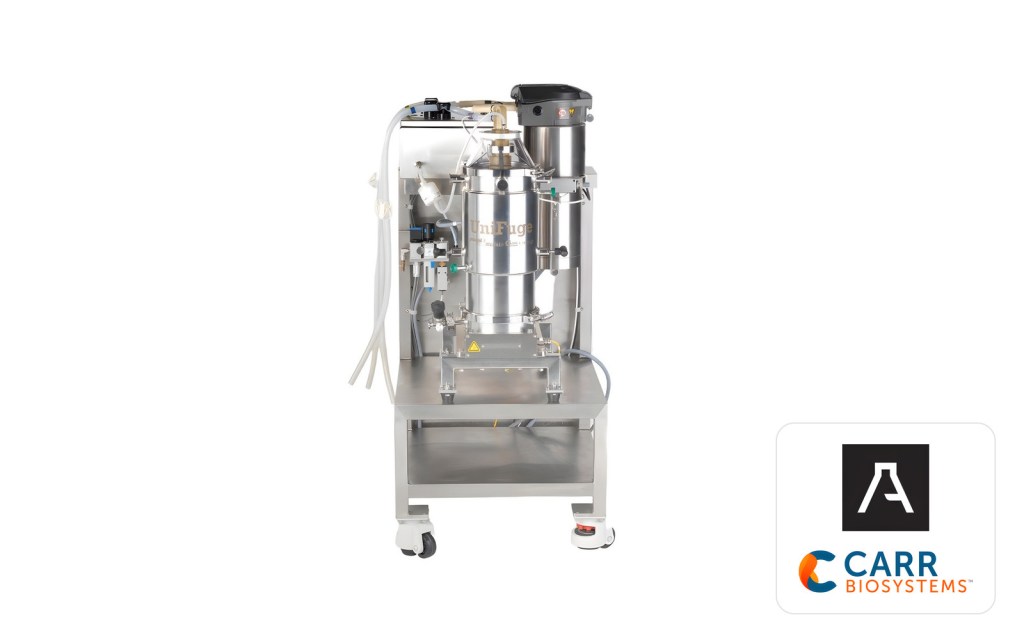
Made Scientific, a U.S.-based cell therapy contract development and manufacturing organization (CDMO), and CARR Biosystems, a developer of centrifugal separation technologies for bioprocessing, announced a partnership to integrate UniFuge single-use centrifugation systems into mesenchymal stem cell (MSC) and feeder cell manufacturing. Made Scientific will deploy multiple systems at its Princeton, New Jersey, and East Norriton, Pennsylvania, facilities for cell harvest, washing and concentration in 3D and large-scale manufacturing, supporting allogeneic (donor derived) programs as they scale.
Stay updated on Cell & Gene news
Thanks! Your signup has been saved.
Syed T. Husain, Chairman and CEO of Made Scientific, said: “As we bring 3D bioreactor capacity online, harvest and wash is where large-volume processes are most often constrained or where significant yields are lost. Integrating CARR’s UniFuge platform across our Princeton and East Norriton network gives our clients a robust, closed, and automated processing option from development through commercial supply.”
UniFuge processing
The UniFuge platform uses low-shear tubular bowl centrifugation for cell concentration, washing, media exchange, harvest and formulation. Its single-use family spans process volumes from milliliters to more than 2,000 liters. CARR describes the platform as maintaining high cell viability and product recovery, with automated operation, rapid changeover and a 21 CFR Part 11–compliant data trail. CARR says these features help manufacturers carry a consistent separation step from process development into good manufacturing practice (GMP) production.
Made Scientific is equipping its East Norriton facility with scalable 3D bioreactor platforms of up to 200 liters. UniFuge will provide a closed, automated separation step for its MSC and feeder cell processes as those programs scale.
Made Scientific will integrate the systems into its existing development and GMP manufacturing workflows, complementing the closed and automated technologies it already operates. Made Scientific says translating smaller-scale process development work to larger volumes on the same technology supports comparability and reduces scale-up risk.
Development studies
The companies also plan joint development studies using CARR’s UFMini benchtop system to generate small-scale data intended to carry forward to larger volumes. Made Scientific will serve as a preferred CDMO for CARR customers evaluating the platform.
Made Scientific’s MSC and extracellular vesicle (EV) offerings were established through its partnership with RoosterBio, which has developed scalable 2D flask and 3D bioreactor manufacturing platforms for MSCs and EVs. RoosterBio has also recently integrated UniFuge into its bioprocess engineering capabilities and process development services. The release states that sponsors will benefit from seamless technology transfer from development to GMP manufacturing as programs using RoosterBio’s MSC and EV bioprocesses featuring UniFuge transition into Made Scientific’s GMP operations.
Joel Williams, President of CARR Biosystems, said: “Their team’s manufacturing expertise and focus on scale-up align closely with how we designed the UniFuge platform.”
Made Scientific recently acquired its operational GMP facility in East Norriton, adding to its established operations in Princeton.
Want to keep up on regenerative medicine? Get the weekly newsletter here.
Similar stories
 Darwin Biotechnology Enrolls First Patient in Phase II Trial of MSC-Derived Protein Complex for Persistent Neurological Deficits After Ischemic Stroke
 New Trial – Allogeneic Bone Marrow Mesenchymal Stem Cell Injection for Sarcopenia
 Umbilical Cord Mesenchymal Stem Cell Injections Lower Pain Scores More Than Hyaluronate in 50-Patient Severe Knee Osteoarthritis Trial
 Stempeutics Nabs US Patent for Osteoarthritis Treatment Combining Bone Marrow Stem Cells and Hyaluronic Acid
 Wolwo Bio Subsidiary Receives Chinese Trial Authorization for Umbilical Cord Mesenchymal Stem Cell Therapy for Sepsis
 New Trial – Phase II Umbilical-Cord Stem Cells for Amyotrophic Lateral Sclerosis
 New Trial – Intranasal Stem Cells for Perinatal Brain Injury and Cerebral Palsy
 Made Scientific Acquires Resilience’s 85K-Square-Foot Cell Therapy Facility