Cellares and Seoul National University Hospital to Test Automated Manufacturing for a Gene-Modified Blood Stem Cell Therapy
The hospital is developing the therapy for paroxysmal nocturnal hemoglobinuria, a rare blood disorder.
Key Points
- Cellares and Seoul National University Hospital will test automated manufacturing of a gene-modified blood stem cell therapy for paroxysmal nocturnal hemoglobinuria.
- The proof-of-concept will assess translating SNUH’s two-step transfection workflow using Cellares’ single-use electroporation module.
- The partnership marks Cellares’ second collaboration in Asia and is intended to support future U.S. clinical development of SNUH’s PNH program.
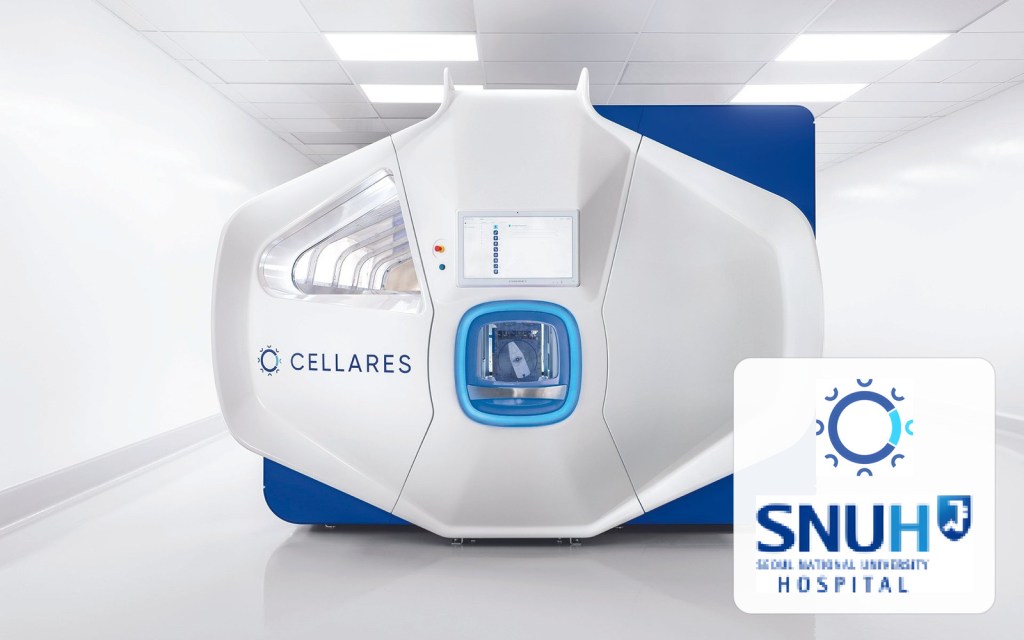
Cellares, an Integrated Development and Manufacturing Organization (IDMO), and Seoul National University Hospital (SNUH), a translational medical center in South Korea, announced a partnership to evaluate automated manufacturing for a gene-modified hematopoietic stem and progenitor cell (HSPC) therapy targeting paroxysmal nocturnal hemoglobinuria (PNH) on Cellares’ Cell Shuttle platform. The collaboration will evaluate translating SNUH’s gene-modified HSPC manufacturing process to the Cell Shuttle, focusing on a two-step transfection workflow through Cellares’ fully integrated, single-use electroporation module. Cellares will also support preclinical development and IND-enabling manufacturing workflows for SNUH’s PNH program, with the goal of establishing a scalable manufacturing strategy for future U.S. clinical development.
Stay updated on Cell & Gene news
Thanks! Your signup has been saved.
“Advancing gene-modified HSPC therapies requires a manufacturing approach that can support both the complexity of the process and the rigor of clinical translation,” said Professor Youngil Koh, Director of the SNUH GMP Facility. “By working with Cellares, we are evaluating how automation can strengthen manufacturing reliability and scalability as we advance this program toward clinical development.”
“Gene-modified HSPC therapies are a natural fit for the Cell Shuttle and an area where Cellares has established manufacturing expertise,” said Fabian Gerlinghaus, Co-Founder and CEO of Cellares. “By automating complex workflows, including electroporation, we can deliver the scalability, reliability and manufacturing economics required to advance these therapies through clinical development. This partnership extends that capability to SNUH as it prepares its PNH program for future clinical development in the United States.”
Gene-modified HSC manufacturing remains labor-intensive, variable, and difficult to scale. The Cell Shuttle is an end-to-end automated cell therapy manufacturing platform designed to improve the scalability and reliability of autologous cell therapy manufacturing. The proof-of-concept will assess the potential to automate SNUH’s manufacturing process on the Cell Shuttle, with the goal of improving reliability, reducing manufacturing costs, and supporting broader patient access as the program advances.
Cell Shuttle Platform
The Cell Shuttle is the first cell therapy manufacturing platform to receive the FDA’s Advanced Manufacturing Technology designation. Cellares reports a 100% automation success rate across more than a dozen automated processes. Cellares was also accepted into the FDA’s inaugural Manufacturing PreCheck cohort, the only cell therapy platform among seven companies nationwide, providing early and ongoing engagement with the FDA during facility development and application submission periods.
Cellares has achieved clinical validation milestones including a successful IND amendment enabling active clinical manufacturing on the Cell Shuttle platform and the dosing of first patients in a partner clinical trial, spanning oncology and autoimmune indications. The company operates its first commercial-scale IDMO Smart Factory in Bridgewater, New Jersey, with additional facilities under construction in Europe and Japan.
About Seoul National University Hospital
Seoul National University Hospital is a medical center in South Korea dedicated to advancing patient care through education, research, and clinical practice. The institution collaborates with leading institutions worldwide on gene-modified hematopoietic stem cell-based treatments.
Want to keep up on regenerative medicine? Get the weekly newsletter here.
Similar stories
 California Agency Awards $9 Million to Enloe Health for Northern California Regenerative Medicine Access Center
 Konkuk University Team Reports Urine-Derived Stem Cell Platform Restores Erectile Function Indicator in Nerve-Injured Rats
 Ocugen Executes Licensing Agreement for Exclusive Middle East and North Africa Rights to Modifier Gene Therapy for Retinitis Pigmentosa
 Rznomics’ RNA-Editing Gene Therapy Receives EU Orphan Designation for Glioma
 ImmuneBridge Partners with Bloodworks Bio to Use Public Cord Blood for Allogeneic Cell Therapy Development
 Amish-Backed Gene Therapy Company, Plowshare Therapies, Raises $6.7 Million
 Vitalant Launches Phoenix Cell-Based Analytics Lab to Support Allogeneic Therapy Developers
 Orca Bio Publishes Long-Term Survival Data from TREGZI Blood Stem Cell Therapy