Scripps Health Receives $12.7 Million Grant for Stem Cell Knee Research
The San Diego non-profit has received a $12.7 million grant to advance scaffold-free tissue engineering research aimed at repairing knee cartilage and bone damage.
Key Points
- Scripps Health has received a $12.7 million grant to advance scaffold-free tissue engineering research for knee cartilage and bone repair.
- The work focuses on building tissue without synthetic scaffolds, an approach intended to improve integration with native tissue.
- The research team includes orthopedic surgeons, stem cell researchers, biostatisticians, and clinical research staff preparing for future IND-supported trials.
Research Focus
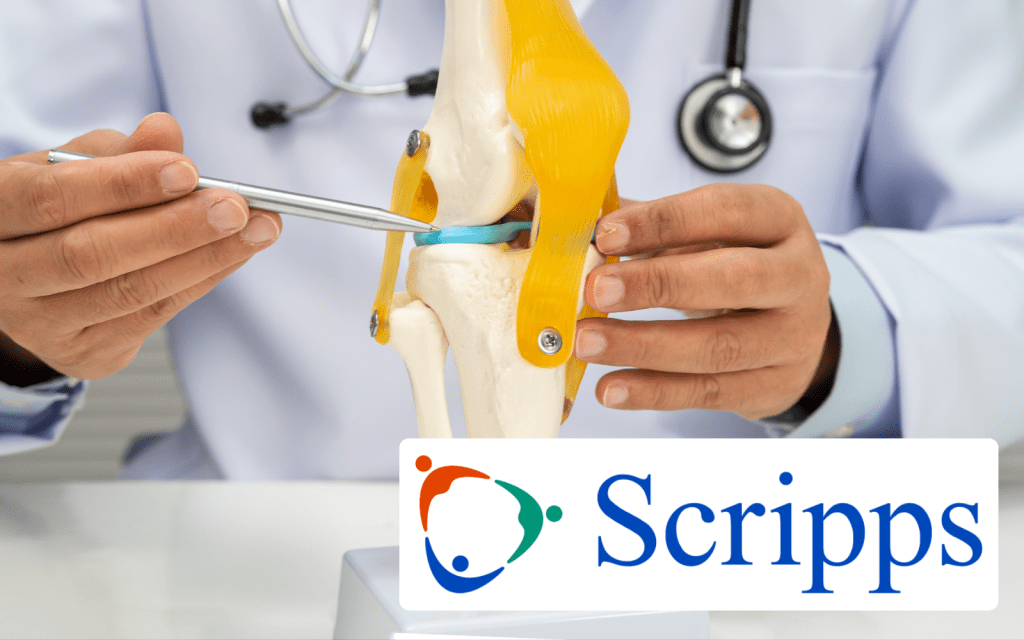
Scripps Health has received a $12.7 million grant to support scaffold-free tissue engineering research aimed at repairing cartilage and bone damage in the knee. The work expands on efforts to develop regenerative approaches for joint injuries that are difficult to treat and can lead to longer-term degeneration.
Stay updated on Cell & Gene news
Thanks! Your signup has been saved.
Scaffold-free tissue engineering differs from more conventional methods, where transformed stem cells are embedded in a fiber scaffold and grown into tissue. This newer approach is designed to avoid some of the limitations linked to scaffolds, including poor integration and compatibility with host tissue. The company describes scaffold-free tissue as more closely resembling developing native tissue, which may improve healing potential.
Scripps senior staff scientist Shawn Grogan, PhD, developed the technology to generate scaffold-free cartilage and bone tissue in the lab by producing cellular spheroids (3D clusters of cells) from a specific stem cell source (mesenchymal stem cells), which fused together to form tissue. Researchers then implanted these lab-grown tissues into osteoarthritic tissue samples. Scripps reported that the scaffold-free implants effectively repaired the defects and structurally integrated with the injured tissues.
According to a report in Clinical Orthopaedics and Related Research, knee cartilage injuries affect about 900,000 people each year in the United States and lead to more than 200,000 surgical procedures. While the current research is centered on the knee, similar cartilage and bone injuries also occur in the ankle, elbow, shoulder, and hip. These conditions can also be a precursor to osteoarthritis.
Team and Clinical Planning
Clinical trials proposed in the IND will be designed and conducted by Scripps Clinical Research Services under chief research officer Addie Fortmann, PhD. The broader effort is supported by SCORE at Scripps Clinic, a center focused on orthopedic research and treatment areas including cartilage allografts, cartilage, bone and tendon tissue engineering, stem cell research, and smart joint replacement implants.
The Scripps Health research team includes Dr. D’Lima, Shawn Grogan, PhD, Steven Copp, MD, Samantha Bagsic, PhD, Emily Martin, and Grant Stinebaugh. Dr. Bugbee, along with Scripps Clinic orthopedic surgeons Heinz Hoenecke, MD, and Tim Wang, MD, will lead the clinical side of the study, including development of the surgical procedure for animal models. Martin Lotz, PhD, of Scripps Research will serve as a consulting team member.
Want to keep up on regenerative medicine? Get the weekly newsletter here.
Similar stories
 Wolwo Bio Subsidiary Receives Chinese Trial Authorization for Umbilical Cord Mesenchymal Stem Cell Therapy for Sepsis
 New Trial – Phase II Umbilical-Cord Stem Cells for Amyotrophic Lateral Sclerosis
 New Trial – Intranasal Stem Cells for Perinatal Brain Injury and Cerebral Palsy
 Novadip Secures €10.4M for Pivotal Phase 3 Bone Repair Cell Therapy Trial
Editor’s Picks
 Century Therapeutics Reports Sustained Glucose Control With iPSC-Derived Islets in Diabetic Mice, IND Soon
 Inside Cellular Intelligence: The Zuck-Backed AI Company That Acquired Novo’s Parkinson’s Cell Therapy
 Webinar: Scaling iPSC Therapies Without Scaling VariabilityOn-Demand
 Aspen Neuroscience Publishes Preclinical Data on Parkinson’s iPSC-Derived Cell Therapy