Novartis Receives Positive CHMP Opinion for its Gene Therapy, Itvisma, for Spinal Muscular Atrophy
The recommendation is backed by Phase III data showing that Novartis’ one-time gene therapy improved motor function in people aged two and older with SMA and could lessen reliance on ongoing chronic treatment.
Key Points
- Novartis has received a positive CHMP opinion for Itvisma for children aged two and older, teens, and adults with 5q spinal muscular atrophy with a bi-allelic SMN1 mutation.
- The recommendation is supported by Phase III STEER data showing a statistically significant improvement in motor function versus sham over 52 weeks.
- Itvisma is a one-time intrathecal gene replacement therapy designed to replace the SMN1 gene and could reduce reliance on chronic SMA treatment.
CHMP opinion and supporting data
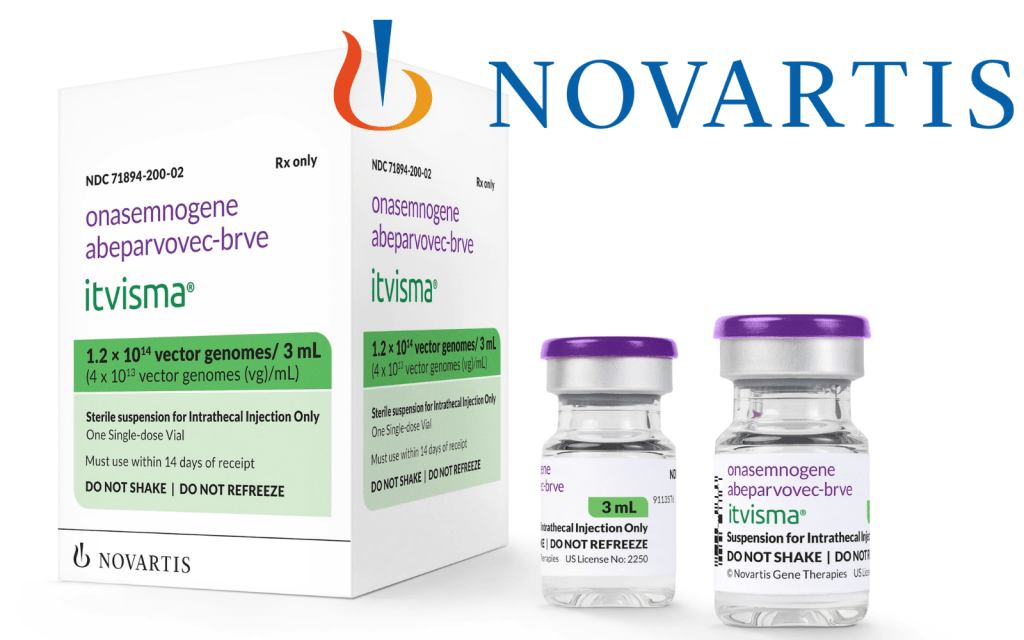
Novartis has received a positive CHMP opinion recommending marketing authorization for Itvisma (intrathecal onasemnogene abeparvovec) in the European Union. The Committee for Medicinal Products for Human Use (CHMP) is the European Medicines Agency’s (EMA) committee responsible for human medicines.
Stay updated on Cell & Gene news
Thanks! Your signup has been saved.
The recommendation covers children aged two and older, teens, and adults living with 5q spinal muscular atrophy (SMA) with a bi-allelic mutation in the survival motor neuron 1 (SMN1) gene.
SMA is a rare genetic neuromuscular disease caused by a mutated or missing SMN1 gene. Loss of SMN protein leads to progressive motor neuron damage and worsening muscle weakness, including effects on breathing, swallowing, and movement. Disease severity is influenced in part by the number of SMN2 gene copies, which produce only a small fraction of functional SMN protein.
The opinion is based on the registrational Phase III STEER study, along with supportive data from the Phase IIIb STRENGTH study and the Phase I/II STRONG study. In STEER, Itvisma showed a 2.39-point improvement on the Hammersmith Functional Motor Scale Expanded (HFMSE), compared with 0.51 points in the sham group, with a p value of 0.0074. Novartis said the effect was sustained through 52 weeks of follow-up. The company also said the STEER and STRENGTH studies showed clinically meaningful benefit in both treatment-naive and pre-treated patients.
- Itvisma arm: 2.39-point HFMSE improvement, n=75
- Sham arm: 0.51-point HFMSE improvement, n=51
- P value: 0.0074
What Itvisma is intended to do
Itvisma is an adeno-associated virus 9 (AAV9)-based gene therapy delivered by a one-time intrathecal injection. It is designed to address the genetic cause of SMA by providing a functional copy of the SMN1 gene, with the goal of improving motor function through sustained SMN protein expression.
According to Novartis, the therapy uses a fixed dose that does not need adjustment based on age or body weight. If approved, it would be the first gene replacement therapy in the European Union for this older SMA population. The company says this one-time approach could reduce the need for ongoing treatment used with other available therapies.
Timeline
Following the recommendation, the European Commission is expected to make a final decision within about two months.
Professor Tim Hagenacker, Department of Neurology, University Hospital Essen, Essen, Germany, said: “Itvisma met the primary endpoint showing motor function improvement versus placebo. Even a 1-point difference in the HFMSE can translate into tangible functional gains for individuals with SMA, such as the ability to grasp a pen. Preserving existing capabilities is critical, as maintaining independence and autonomy is a central goal of care for patients living with a progressive neuromuscular disease.”
Want to keep up on regenerative medicine? Get the weekly newsletter here.
Similar stories
 Kolon’s Cell-Based Gene Therapy Fails Phase 3 Osteoarthritis Trial
 CIRM Approves $662M Regen Med Funding, Largest in its History
 FDA Reverses Decision on Regenxbio’s Gene Therapy for Hunter’s Syndrome, Supporting BLA Resubmission for Accelerated Approval
 Altman-Backed Regenerative Medicine Startup, Retro Biosciences, Closes Funding Round at $1.8B Valuation
Editor’s Picks
 Century Therapeutics Reports Sustained Glucose Control With iPSC-Derived Islets in Diabetic Mice, IND Soon
 Umbilical Cord Mesenchymal Stem Cell Injections Lower Pain Scores More Than Hyaluronate in 50-Patient Severe Knee Osteoarthritis Trial
 Stempeutics Nabs US Patent for Osteoarthritis Treatment Combining Bone Marrow Stem Cells and Hyaluronic Acid
 Inside Cellular Intelligence: The Zuck-Backed AI Company That Acquired Novo’s Parkinson’s Cell Therapy