MEDIPOST’s Umbilical Cord Stem Cell Phase 3 For Knee Osteoarthritis Meets Primary Endpoints In Japan, Setting Up Commercialization
The trial demonstrated that Cartistem can both relieve symptoms and regenerate cartilage, and the company is advancing manufacturing readiness for its first overseas commercialization move.
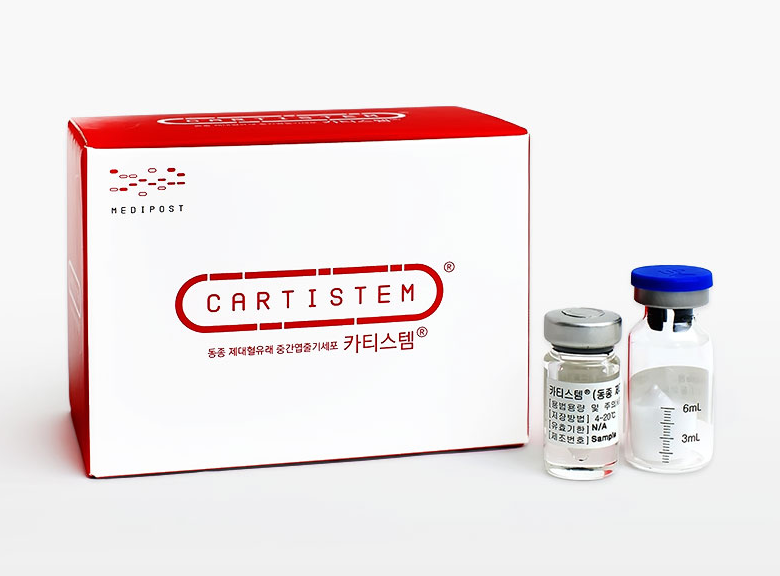
Key Points
- Cartistem met all primary and secondary endpoints in a Japanese phase 3 trial for knee osteoarthritis.
- The company plans to file for approval in Japan by the end of this year and is targeting approval in 2027.
- The 130-patient study compared Cartistem with hyaluronic acid and, according to the company, showed statistically significant benefits on pain, function, and cartilage measures.
Phase 3 Readout
MEDIPOST said its umbilical cord-derived mesenchymal stem cell therapy for knee osteoarthritis (KOA), Cartistem, met all primary and secondary goals in a Japanese phase 3 trial, supporting a planned approval filing in Japan by the end of this year. Cartistem has been approved in Korea for over a decade, and this may become its first major overseas market.
The Japanese study enrolled 130 patients across 13 hospitals and followed them for 52 weeks, comparing Cartistem to hyaluronic acid, a standard kne pain injection.

It met both primary endpoints with statistically significant improvement on:
- WOMAC, a measure of knee pain and function (p-value of less than 0.0001)
- ICRS grade, which assesses cartilage damage (p-value of less than 0.0002)
The company did not disclose the absolute size of the treatment benefit in the release, but I imagine we’ll hear about it soon.
IT also met all secondary endpoints, including VAS, IKDC, and KOOS scores, which track pain and knee function. Serious adverse events reported were not considered related to Cartistem.
The data are notable because the effect was observed in both symptom-based and objective cartilage-based measures, which may indicate that it’s a disease-modifying osteoarthritis drug (DMOAD).
What’s Next?
This Japanese data may influence how MEDIPOST frames its US program. The company received an FDA fast-track voucher in the US late last year. If you’re unaware of the fast track designation, in a nutshell, if your therapy has a lot of data produced in another country and it looks good enough, the FDA will let you skip the early trial phases.
Because Cartistem has been approved in Korea for over a decade and has plenty of published research (here’s one of their papers with before/after arthroscopic images), they were able to start on Phase 3, likely beginning sometime this year.
Commercial Plans and Scale Up
In December, the company signed an exclusive sales agreement with Teikoku Seiyaku, and they recently announced they’re working with Charles River to expand manufacturing in APAC/North America.
They’ve also mentioned innovations in their manufacturing processes, recently telling Korea Biomedical Review that they’ve purchased Curiosis’ Celloger Stack-H live-cell imaging system, which may help standardize cell-density assessment and decisions about when to subculture cells, while converting process-control indicators into more measurable data.
Exciting times for the orthobiologics space.
Source – Korea Biomedical Review
Want to keep up on regenerative medicine? Get the weekly newsletter here.