PBS Biotech Teaming Up With Rockwell Automation to Scale Up Cell Therapy Development
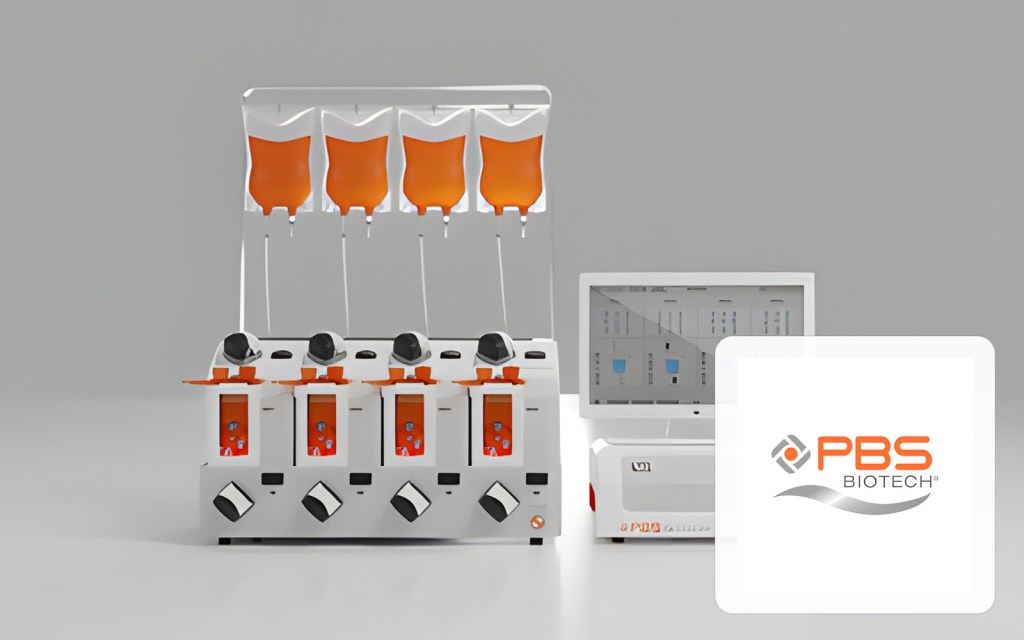
The MiniPRO platform runs up to 24 independently controlled bioreactors in parallel, letting developers test processes with automation designed to integrate into larger manufacturing systems.
Key Points
- PBS Biotech embedded Rockwell Automation technology in its MiniPRO bioreactor platform for cell therapy process development.
- MiniPRO supports up to 24 independently controlled bioreactors and uses automation designed to integrate with facility-scale control systems.
- Rockwell Automation said PBS Biotech demonstrated process performance consistent with its larger-scale Vertical-Wheel bioreactors.
Rockwell Automation, an industrial automation and digital transformation company, announced that PBS Biotech, a manufacturer of single-use bioreactor systems and provider of process development services, embedded Rockwell technology in its MiniPRO platform to support cell therapy process development and scale-up to commercial manufacturing.
Stay updated on Cell & Gene news
Thanks! Your signup has been saved.
Cell therapy developers face pressure to accelerate process development while addressing scalability, reproducibility and regulatory readiness. Rockwell Automation identified low-throughput, iterative workflows, manual processes, non-standardized environments and dependence on proprietary or PC-based systems as obstacles that can slow development and introduce variability.
MiniPRO is a closed, automated system with up to 24 independently controlled bioreactors for parallel process development. It uses FactoryTalk software and the Process Library for real-time process control and visibility. According to Rockwell Automation, this automation environment can integrate into a larger PlantPAx distributed control system used to automate an entire cell therapy facility.
“Rockwell technologies let us provide industrial-grade control of critical process parameters, so users are generating high-quality process data in an environment that looks and feels like commercial manufacturing,” said Sharon Harvey, director of product management and strategy at PBS Biotech. “That’s really advantageous because developers are able to introduce this during the product development stage and then evolve towards clinical and commercial manufacturing with history and control.”
System integration and scale-up
The Advanced Regenerative Manufacturing Institute (ARMI), a member-based nonprofit organization focused on advancing the US bioeconomy, was an early adopter of the PBS platform.
“Typically, you don’t see this control in a system as small as the MiniPRO,” said Tom Bollenbach, chief technology officer at ARMI. “With our first integrated manufacturing line, our biggest challenge was getting the process control system to sequentially hand off between subsystems. Because the MiniPRO has Rockwell controls, system integration is streamlined. When we talk to the supervisory system that makes hand-offs happen, it’s very easy to get them to talk to each other. That enables us to build bigger manufacturing lines.”
According to Rockwell Automation, PBS Biotech demonstrated that process performance on MiniPRO is consistent with its larger-scale Vertical-Wheel bioreactors, allowing developers to generate manufacturing-relevant data as programs advance. Rockwell said this continuity, combined with compatibility with widely used automation environments, supports more predictable transfer into good manufacturing practice (GMP) settings.
“As cell therapy programs advance, seamless tech transfers between development outputs and manufacturing requirements help reduce risk during scale-up,” said Matt Weaver, vice president, global industry – life sciences at Rockwell Automation. “By introducing a widely used automation platform during process development, the MiniPRO helps teams preserve process knowledge and control as they progress toward clinical and commercial manufacturing.”
PBS Biotech describes its proprietary Vertical-Wheel technology as enabling scalable, low-shear mixing for cell therapy and cell culture applications.
Want to keep up on regenerative medicine? Get the weekly newsletter here.
Similar stories
 Inside Cellular Intelligence: The Zuck-Backed AI Company That Acquired Novo’s Parkinson’s Cell Therapy
 I Peace Wins Top 10 Longevity Breakthrough Award for Cell-Free Stem Cell Technology
 Encellin and Breakthrough T1D Planning Phase 1 of Immune-Protected Cell Therapy for Type 1 Diabetes
 Webinar: Scaling iPSC Therapies Without Scaling VariabilityOn-Demand
Editor’s Picks
 Century Therapeutics Reports Sustained Glucose Control With iPSC-Derived Islets in Diabetic Mice, IND Soon
 Umbilical Cord Mesenchymal Stem Cell Injections Lower Pain Scores More Than Hyaluronate in 50-Patient Severe Knee Osteoarthritis Trial
 Stempeutics Nabs US Patent for Osteoarthritis Treatment Combining Bone Marrow Stem Cells and Hyaluronic Acid
 Aspen Neuroscience Publishes Preclinical Data on Parkinson’s iPSC-Derived Cell Therapy