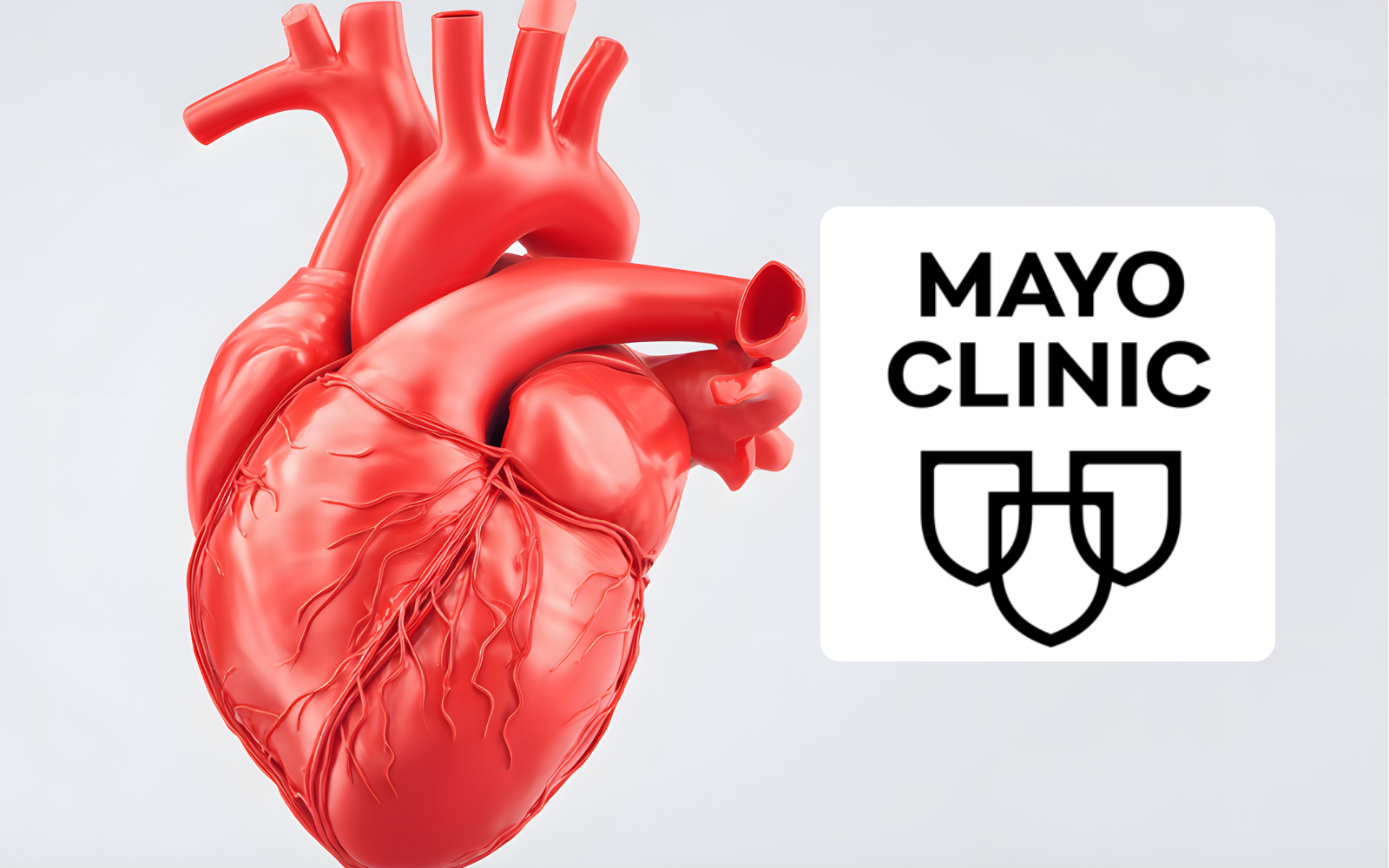
Mayo Clinic researchers have developed a new method to repair damaged hearts using lab-grown tissue derived from induced pluripotent stem cells (iPSCs). It’s in preclinicals, but they hope to help patients avoid open-heart surgery by instead delivering an engineered tissue patch through a small incision.
Each year, over 4,000 people receive donor heart transplants across the United States; however, thousands more die waiting for organs due to shortages or health complications during long waits. ”Our vision,” says Dr. Wuqiang Zhu, Ph.D., Cardiovascular Researcher at Mayo Clinic, “is that patients could one day receive engineered heart tissue made from their own reprogrammed cells, delivered through a minimally invasive procedure — no donor organ, no long recovery, just a repaired heart.”
Outlined in a new paper published in Acta Biomaterialia, The Mayo Clinic team began by creating iPSCs and differentiating them into functional cardiomyocytes. However, safely delivering these engineered tissues to the heart is challenging, especially for patients too frail for open-heart surgery.

To solve that, the team partnered with engineers at the University of Nebraska Medical Center to develop a flexible patch composed of nano- and microfibers coated with gelatin. This scaffold reportedly can support a combination of cardiomyocytes, endothelial cells, and fibroblasts for structural support.
Before transplantation, they infused the patch with bioactive factors, such as fibroblast growth factor 1 and CHIR99021, to promote blood vessel growth and cell survival after implantation. “The beauty of this design,” says Dr. Zhu, “is that it can be folded like a piece of paper, loaded into a slender tube, and delivered precisely where it’s needed through a small incision in the chest. Once in place, it unfolds and adheres naturally to the heart’s surface.” Instead of sutures, they used a biocompatible surgical adhesive to secure the patch, minimizing trauma to healthy tissue.
The preclinical study showed several benefits, including:
- Improved heart function following injury
- Reduced scarring
- Enhanced vascular growth within damaged areas
- Dampened inflammation compared with traditional approaches
The team plans to conduct further large-scale preclinical testing before proceeding to human clinical trials, which may take several years.